Quotessence
Home / Quotes / Quote by Norbert Wiener

Quote by Norbert Wiener

“Scientific discovery consists in the interpretation for our own convenience of a system of existence which has been made with no eye to our convenience at all.”

Quote by Norbert Wiener

Author
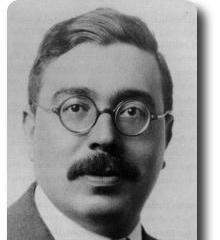
Norbert Wiener
Norbert Wiener

Norbert Wiener, born on November 26, 1894, and died on March 18, 1964, was an American mathematician and a founding figure in the field of cybernetics. Known as the 'father of the information age,' Wiener made significant contributions to mathematics, physics, and engineering, particularly in the areas of stochastic processes, Fourier analysis, and control theory. more

You May Also Like

“The validity of all the Inductive Methods depends on the assumption that every event, or the beginning of every phenomenon, must have some cause; some antecedent, upon the existence of which it is invariably and unconditionally consequent.”

“The web is more a social creation than a technical one. I designed it for a social effect - to help people work together - and not as a technical toy. The ultimate goal of the Web is to support and improve our weblike existence in the world. We clump into families, associations, and companies. We develop trust across the miles and distrust around the corner.”

“Think binary. When matter meets antimatter, both vanish, into pure energy. But both existed; I mean, there was a condition we'll call "existence." Think of one and minus one. Together they add up to zero, nothing, nada, niente, right? Picture them together, then picture them separating-peeling apart. ... Now you have something, you have two somethings, where once you had nothing.”

“Tis evident that all reasonings concerning matter of fact are founded on the relation of cause and effect, and that we can never infer the existence of one object from another, unless they be connected together, either mediately or immediately... Here is a billiard ball lying on the table, and another ball moving toward it with rapidity. They strike; and the ball which was formerly at rest now acquires a motion. This is as perfect an instance of the relation of cause and effect as any which we know, either by sensation or reflection.”