Quotessence
Home / Quotes / Quote by Ernest Bevin

Quote by Ernest Bevin

“A newspaper has three things to do. One is to amuse, another is to entertain and the rest is to mislead.”

Quote by Ernest Bevin

Author
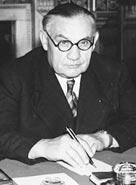
Ernest Bevin
Ernest Bevin

British statesman who served as Foreign Secretary, known for his diplomatic policies during World War II. more

You May Also Like

“The more subsidized it is, the less free it is. What is known as 'free education' is the least free of all, for it is a state-owned institution; it is socialized education - just like socialized medicine or the socialized post office - and cannot possibly be separated from political control.”

“The argument that the two parties should represent opposed ideals and policies, one, perhaps, of the Right and the other of the Left, is a foolish idea acceptable only to doctrinaire and academic thinkers. Instead, the two parties should be almost identical, so that the American people can throw the rascals out at any election without leading to any profound or extensive shifts in policy. Then it should be possible to replace it, every four years if necessary, by the other party, which will be none of these things but will still pursue, with new vigor, approximately the same basic policies.”

“The governments of the Western nations, whether monarchical or republican, had passed into the invisible hands of a plutocracy, international in power and grasp. It was, I venture to suggest, this semi-occult power which....pushed the mass of the American people into the cauldron of World War I.”

“In order to bring a nation to support the burdens incident to maintaining great military establishments, it is necessary to create an emotional state akin to war psychology. There must be the portrayal of an external menace or of internal conditions rendered intolerable by the unjust restraints of foreign nations. This involves the development to a high degree of the nation-hero nation-villain ideology and the arousing of the population to a sense of the duty of sacrifice.”

“Paradoxically, preserving liberty may require the rule of a single leader-a dictator-willing to use those dreaded 'extraordinary measures, which few know how, or are willing, to employ.'”