Quotessence
Home / Quotes / Quote by Raymond Geuss

Quote by Raymond Geuss

“Neither the good nor the true is self-realizing, so it is not generally a sufficient explanation of why people believe that X is true, or of why people do Y that Y is good.”

Quote by Raymond Geuss

Author
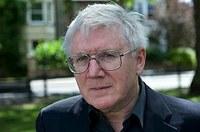
Raymond Geuss
Raymond Geuss

Raymond Geuss is a renowned philosopher, born in 1946. His research focuses on political philosophy and moral philosophy, critically analyzing ideas such as liberalism, socialism, and Marxism. more

You May Also Like

“To the extent to which the pull that moves me really is irresistible, like an invincibly strong addiction, the normal procedures of evaluation, deliberation, choice, decision, etc. that constitute the substance of our political life are not operating. The same is true of overwhelming aversion. The person being tortured who simply wants it to stop, period, is also not a good model for an agent acting politically.”

“It is an assumption that there is always one single dimension for assessing persons and their actions that has canonical priority. This is the dimension of moral evaluation; "good/evil" is supposed always to trump any other form of evaluation, but that is an assumption, probably the result of the long history of the Christianisation and then gradual de-Christianisation of Europe, which one need not make. Evaluation need not mean moral evaluation, but might include assessments of efficiency, ... simplicity, perspicuousness, aesthetic appeal, and so on.”

“Monotheistic religions in the West have tended to conflate having a general orientation in life, having a specific theory of the world, having a sense of the positive meaningfulness of one's existence, and having a fixed set of rules for behavior, but these elements are in principle separable. ... The "metaphysical need," ... both Marx and Nietzsche held, is a historical phenomenon that arises under determinate circumstances, and could be expected to disappear under other circumstances that we could relatively easily envisage.”

“Humans in modern societies are driven by a perhaps desperate hope that they might find some way of mobilizing their theoretical and empirical knowledge and their evaluative systems so as both to locate themselves and their projects in some larger imaginative structure that makes sense to them. ... Furthermore, many modern agents would like it to be the case that the form of orientation which their life has is, if not true, at least compatible with the best available knowledge.”

“In some central and important cases, ... the existence of specific power relations in the society will produce an appearance of a particular kind. Certain features of the society that are merely local and contingent, and maintained in existence only by the continual exercise of power, will come to seem as if they were universal, necessary, invariant, or natural features of all forms of human social life, or as if they arose spontaneously and uncoercedly by free human action.”