“Imagine that the keeper of a huge, strong beast notices what makes it angry, what it desires, how it has to be approached and handled, the circumstances and the conditions under which it becomes particularly fierce or calm, what provokes its typical cries, and what tones of voice make it gentle or wild. Once he's spent enough time in the creature's company to acquire all this information, he calls it knowledge, forms it into a systematic branch of expertise, and starts to teach it, despite total ignorance, in fact, about which of the creature's attitudes and desires is commendable or deplorable, good or bad, moral or immoral. His usage of all these terms simply conforms to the great beast's attitudes, and he describes things as good or bad according to its likes and dislikes, and can't justify his usage of the terms any further, but describes as right and good the things which are merely indispensable, since he hasn't realised and can't explain to anyone else how vast a gulf there is between necessity and goodness.”
Quote by Plato
Work
In 'The Republic,' Plato presents a dialogue between Socrates, Glaucon, and other philosophers, discussing the nature of justice, the structure of an ideal society, and the role of philosophers as rulers. The work is divided into ten books and delves into various philosophical topics, including the nature of the soul, the nature of justice, and the nature of the state. more
Author
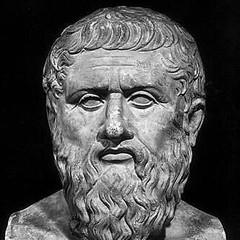
Plato (428 BC - 348 BC) was a prominent Greek philosopher, one of the most influential figures in Western philosophy. He founded the Academy, which was the first institution of higher education in the Western world. Plato's philosophy, centered around the theory of Forms, emphasized the importance of reason and morality. more
You May Also Like
“People forget to understand your goodness, teach them something new.”
“i can't prove this but i can't prove you're a good person though i suspect you're a good person.”
“He who wishes to secure the good of others, has already secured his own.”
“In hardship, He showed patience; in victory, He showed humility.”