Quotessence
Home / Quotes / Quote by John Ruskin

Quote by John Ruskin

Work

The Two Paths: Being Lectures on Art, and Its Application to Decoration and Manufacture, Delivered in 1858-9

The Two Paths: Being Lectures on Art, and Its Application to Decoration and Manufacture, Delivered in 1858-9 is a scholarly work that explores the intersection of art and practical design. The lectures, delivered over a two-year period, delve into the theoretical underpinnings of art and how these concepts can be effectively utilized in the fields of decoration and manufacturing. The book is likely to be of interest to those studying art history, design, and the history of craftsmanship. more

Author
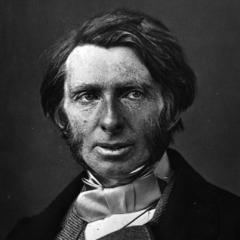
John Ruskin
John Ruskin

John Ruskin was an influential British art critic, writer, and social critic. Known for his profound insights into art, architecture, and social issues, he had a significant impact on the aesthetics and culture of the Victorian era. more

You May Also Like

“One of the greatest of poets, Coleridge was one of the wisest of men, and it was not for nothing that he read us this parable. Let us have a little less of "hands across the sea," and a little more of that elemental distrust that is the security of nations. War loves to come like a thief in the night; professions of eternal amity provide the night.”

“This subject brings me to that vilest offspring of the herd mind -- the odious militia. The man who enjoys marching in line and file to the strains of music falls below my contempt; he received his great brain by mistake -- the spinal cord would have been amply sufficient. This heroism at command, this senseless violence, this accursed bombast of patriotism -- how intensely I despise them! War is low and despicable, and I had rather be smitten to shreds than participate in such doings.”

“All living beings have received their weapons through the same process of evolution that moulded their impulses and inhibitions; for the structural plan of the body and the system of behaviour of a species are parts of the same whole.... Wordsworth is right: there is only one being in possession of weapons which do not grow on his body and of whose working plan, therefore, the instincts of his species know nothing and in the usage of which he has no correspondingly adequate inhibition.”

“Supporters of the war are constantly asking those who oppose it: Why don't you deplore the wrongs and atrocities committed by the other side? The answer, so far as I am concerned, is that I do deplore the wrongs and atrocities committed by the other side. But I am responsible for the wrongs and atrocities committed by our side. And I am no longer able to participate in the assumption that atrocities committed by remote control are less objectionable than those committed at arm's length. I am most concerned with American obstacles to peace because I am an American.”

“Many very intelligent agreeable persons have warts on the forehead, not brown, nor very large, between the eyebrows, which have nothing in them offensive or disgusting. - But a large brown wart on the upper lip, especially when it is bristly, will be found in no person who is not defective in something essential, or at least remarkable for some conspicuous failing.”

“Perhaps it is to prepare to hear some day the music of the spheres that I am always turning my ears to the music of streams. There is indeed a music in streams, but it is not for the hurried. It has to be loitered by and imagined. Or imagined toward, for it is hardly for men at all. Nature has a patient ear. To her the slowest funeral march sounds like a jig. She is satisfied to have the notes drawn out to the lengths of days or weeks or months. Small variations are acceptable to her, modulations as leisurely as the opening of a flower.”