“All truth is profound.”
Quote by Herman Melville
Work
Moby-Dick: or, The Whale
Herman Melville's 'Moby-Dick' is a profound and complex narrative that intertwines the story of Captain Ahab's relentless pursuit of the elusive white whale, Moby Dick, with philosophical musings on nature, religion, and the human soul. The novel is renowned for its rich language, intricate plot, and exploration of themes such as the nature of evil, the role of fate, and the struggle between individualism and societal norms. more
Author
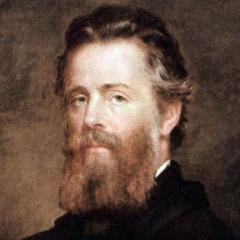
Herman Melville
Herman Melville was a renowned 19th-century American novelist known for his profound psychological descriptions and unique literary style. His masterpiece, 'Moby-Dick', is considered a classic of American literature. more
You May Also Like
Source: The Ambiguities
Source: Correspondence
Source: Mardi: And a Voyage Thither
Source: Romances of Herman Melville: Typee, Omoo, Mardi, Mopby-Dick, White-jacket, Israel Potter, Redburn
Source: Delphi Complete Works of Herman Melville (Illustrated)
“He knows himself, and all that's in him, who knows adversity.”
Source: Delphi Complete Works of Herman Melville (Illustrated)
“You know nothing till you know all; which is the reason we never know any thing.”
Source: Delphi Complete Works of Herman Melville (Illustrated)
Source: Delphi Complete Works of Herman Melville (Illustrated)
“All the world over, the picturesque yields to the pocketesque.”
Source: Billy Budd, Sailor and Selected Tales
Source: Piazza Tales and Other Prose Pieces, 1839-1860: Volume Nine, Scholarly Edition