Quotessence
Home / Quotes / Quote by Arthur Schopenhauer

Quote by Arthur Schopenhauer

Work

The World As Will And Idea: 3 vols in 1 [unabridged]

The World As Will And Idea is a philosophical treatise that delves into the nature of reality, consciousness, and the human experience. Comprising three volumes in a single edition, this book presents a comprehensive analysis of the ideas of will and idea, as developed by the author. It is considered a foundational text in the philosophy of idealism. more

Author
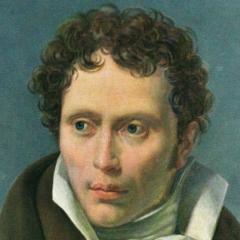
Arthur Schopenhauer
Arthur Schopenhauer

Arthur Schopenhauer was a prominent German philosopher born on February 22, 1788, and died on September 21, 1860. He is one of the most important figures in 19th-century German philosophy and is known for his unique pessimistic philosophical ideas. more

You May Also Like

“The auspices for philosophy are bad if, when proceeding ostensibly on the investigation of truth, we start saying farewell to all uprightness, honesty and sincerity, and are intent only on passing ourselves off for what we are not. We then assume, like those three sophists [Fichte, Schelling and Hegel], first a false pathos, then an affected and lofty earnestness, then an air of infinite superiority, in order to impose where we despair of ever being able to convince.”

“If, while hurrying ostensibly to the temple of truth, we hand the reins over to our personal interests which look aside at very different guiding stars, for instance at the tastes and foibles of our contemporaries, at the established religion, but in particular at the hints and suggestions of those at the head of affairs, then how shall we ever reach the high, precipitous, bare rock whereon stands the temple of truth?”

“Malebranche teaches that we see all things in God himself. This is certainly equivalent to explaining something unknown by something even more unknown. Moreover, according to him, we see not only all things in God, but God is also the sole activity therein, so that physical causes are so only apparently; they are merely occasional causes. ( Recherches de la vérité , Livre VI, seconde partie, chap. 3.) And so here we have essentially the pantheism of Spinoza who appears to have learned more from Malebranche than from Descartes.”

“All pantheism must ultimately be shipwrecked on the inescapable demands of ethics, and then on the evil and suffering of the world. If the world is a theophany , then everything done by man, and even by animal, is equally divine and excellent; nothing can be more censurable and nothing more praiseworthy than anything else; hence there is no ethics.”

“The composer reveals the innermost nature of the world, and expresses the profoundest wisdom in a language that his reasoning faculty does not understand, just as a magnetic somnambulist gives information about things of which she has no conception when she is awake. Therefore in the composer, more than in any other artist, the man is entirely separate and distinct from the artist.”