Quotessence
Home / Quotes / Quote by Aristotle

Quote by Aristotle

“The art of wealth-getting which consists in household management, on the one hand, has a limit; the unlimited acquisition of wealth is not its business. And therefore, in one point of view, all riches must have a limit; nevertheless, as a matter of fact, we find the opposite to be the case; for all getters of wealth increase their hard coin without limit.”

Quote by Aristotle

Work

Delphi Complete Works of Aristotle (Illustrated)

The Delphi Complete Works of Aristotle (Illustrated) is a scholarly compilation that includes all the extant writings attributed to the ancient Greek philosopher Aristotle. The volume is designed to provide readers with a thorough exploration of Aristotle's philosophical, scientific, and logical ideas. The illustrated format aims to clarify complex concepts and make the texts more accessible to modern readers. more

Author
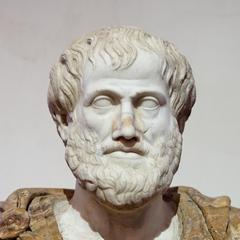
Aristotle
Aristotle

Aristotle, a renowned Greek philosopher, is one of the founders of Western philosophy. His thoughts covered a wide range of fields, including ethics, logic, politics, and had a profound impact on the world. more

You May Also Like

“Inasmuch as every family is a part of a state, and these relationships are the parts of a family, and the virtue of the part must have regard to the virtue of the whole, women and children must be trained by education with an eye to the constitution, if the virtues of either of them are supposed to make any difference in the virtues of the state. And they must make a difference: for the children grow up to be citizens, and half the free persons in a state are women.”

“Special care should be taken of the health of the inhabitants, which will depend chiefly on the healthiness of the locality and of the quarter to which they are exposed, and secondly on the use of pure water; this latter point is by no means a secondary consideration. For the elements which we use the most and oftenest for the support of the body contribute most to health, and among those are water and air. Wherefore, in all wise states, if there is want of pure water, and the supply is not all equally good, the drinking water ought to be separated from that which is used for other purposes.”

“Women who are with child should be careful of themselves; they should take exercise and have a nourishing diet. The first of these prescriptions the legislator will easily carry into effect by requiring that they should take a walk daily to some temple, where they can worship the gods who preside over birth. Their minds, however, unlike their bodies, they ought to keep quiet, for the offspring derive their natures from their mothers as plants do from earth.”

“Youth should be kept strangers to all that is bad, and especially to things which suggest vice or hate. When the five years have passed away, during the two following years they must look on at the pursuits which they are hereafter to learn. There are two periods of life with reference to which education has to be divided, from seven to the age of puberty, and onwards to the age of one and twenty.”

“Since the whole city has one end, it is manifest that education should be one and the same for all, and that it should be public, and not private - not as at present, when every one looks after his own children separately, and gives them separate instruction of the sort which he thinks best; the training in things which are of common interest should be the same for all. Neither must we suppose that any one of the citizens belongs to himself, for they all belong to the state, and are each of them a part of the state, and the care of each part is inseparable from the care of the whole.”

“That education should be regulated by law and should be an affair of state is not to be denied, but what should be the character of this public education, and how young persons should be educated, are questions which remain to be considered. As things are, there is disagreement about the subjects. For mankind are by no means agreed about the things to be taught, whether we look to virtue or the best life. Neither is it clear whether education is more concerned with intellectual or with moral virtue.”