Quotessence
Home / Quotes / Quote by John Dickinson

Quote by John Dickinson

Work

The Political Writings of John Dickinson, Esquire: Late President of the State of Delaware, and of the Commonwealth of Pennsylvania

The Political Writings of John Dickinson, Esquire is a compilation of the political essays and correspondence of John Dickinson, a prominent figure in the early American colonies. Dickinson, known for his eloquence and influence, wrote extensively on issues such as colonial autonomy, the relationship between the colonies and the British government, and the principles of constitutional governance. The volume offers insight into the political thought and actions of Dickinson, who played a significant role in the drafting of the Declaration of Independence and the United States Constitution. more

Author
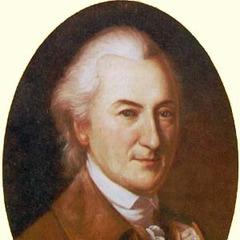
John Dickinson
John Dickinson

John Dickinson, a prominent statesman, lawyer, and writer during the American Revolutionary War, was born on November 2, 1732, and died on February 14, 1808. He was one of the drafters of the United States Constitution and served as a delegate to the Continental Congress, making significant contributions to the development of the early American political and legal system. more

You May Also Like

“The proposed constitution, therefore, even when tested by the rules laid down by its antagonists, is, in strictness, neither a national nor a federal constitution; but a composition of both. In its foundation it is federal, not national; in the sources from which the ordinary powers of the government are drawn, it is partly federal, and partly national; in the operation of these powers, it is national, not federal; in the extent of them again, it is federal, not national; and finally, in the authoritative mode of introducing amendments, it is neither wholly federal, nor wholly national.”

“In this relation, then, the proposed government cannot be deemed a national one; since its jurisdiction extends to certain enumerated objects only, and leaves to the several states, a residuary and inviolable sovereignty over all other objects.”

“We established however some, although not all its [self-government] important principles . The constitutions of most of our States assert, that all power is inherent in the people; that they may exercise it by themselves, in all cases to which they think themselves competent, (as in electing their functionaries executive and legislative, and deciding by a jury of themselves, in all judiciary cases in which any fact is involved,) or they may act by representatives, freely and equally chosen; that it is their right and duty to be at all times armed.”

“O sir, we should have fine times, indeed, if, to punish tyrants, it were only sufficient to assemble the people! Your arms, wherewith you could defend yourselves, are gone; and you have no longer an aristocratical, no longer a democratical spirit. Did you ever read of any revolution in a nation, brought about by the punishment of those in power, inflicted by those who had no power at all?”

“There is something so far-fetched and so extravagant in the idea of danger to liberty from the militia that one is at a loss whether to treat it with gravity or with raillery; whether to consider it as a mere trial of skill, like the paradoxes of rhetoricians; as a disingenuous artifice to instil prejudices at any price; or as the serious.”

“How could a readiness for war in time of peace be safely prohibited, unless we could prohibit, in like manner, the preparations and establishments of every hostile nation? The means of security can only be regulated by the means and the danger of attack. They will, in fact, be ever determined by these rules, and by no others . . . . If one nation maintains constantly a disciplined army, ready for service of ambition or revenge, it obliges the most pacific nations who may be within the reach of its enterprises to take corresponding precautions.”

“The belief in a God All Powerful wise and good, is so essential to the moral order of the world and to the happiness of man, that arguments which enforce it cannot be drawn from too many sources nor adapted with too much solicitude to the different characters and capacities impressed with it.”