Quotessence
Home / Quotes / Quote by Hermann von Helmholtz

Quote by Hermann von Helmholtz

“Just as a physicist has to examine the telescope and galvanometer with which he is working; has to get a clear conception of what he can attain with them, and how they may deceive him; so, too, it seemed to me necessary to investigate likewise the capabilities of our power of thought.”

Quote by Hermann von Helmholtz

Author
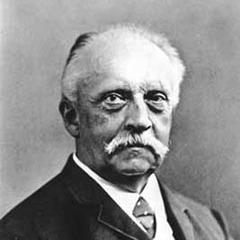
Hermann von Helmholtz

Hermann von Helmholtz was a German physicist, physiologist, and physician. He made significant contributions to the fields of physiology, physics, and philosophy, particularly in the theories of hearing and vision. His research had a profound impact on subsequent physiology and psychology. more

You May Also Like

“The publication in 1859 of the Origin of Species by Charles Darwin made a marked epoch in my own mental development, as it did in that of human thought generally. Its effect was to demolish a multitude of dogmatic barriers by a single stroke, and to arouse a spirit of rebellion against all ancient authorities whose positive and unauthenticated statements were contradicted by modern science.”

“It is a custom often practiced by seafaring people to throw a bottle overboard, with a paper, stating the time and place at which it is done. In the absence of other information as to currents, that afforded by these mute little navigators is of great value.”

“"She can't do sums a bit!" the Queens said together, with great emphasis. "Can you do sums?" Alice said, turning suddenly on the White Queen, for she didn't like being found fault with so much. The Queen gasped and shut her eyes. "I can do Addition, if you give me time-but I can do Subtraction, under any circumstances!"”

“Correct is to recognize what diseases are and whence they come; which are long and which are short; which are mortal and which are not; which are in the process of changing into others; which are increasing and which are diminishing; which are major and which are minor; to treat the diseases that can be treated, but to recognize the ones that cannot be, and to know why they cannot be; by treating patients with the former, to give them the benefit of treatment as far as it is possible.”