Quotessence
Home / Quotes / Quote by Ezra Taft Benson

Quote by Ezra Taft Benson

“"Thou shalt not bear false witness" Exodus 20:16. When we speak of morality, we imply that a man is true to his word-true to his signature on a contract. The violations of God's laws are evidence that lying and misrepresentation are not absent from us.”

Quote by Ezra Taft Benson

Work

The Teachings of Ezra Taft Benson

This book compiles a selection of addresses and sermons delivered by Ezra Taft Benson, a prominent religious leader. The content covers a range of topics including faith, family values, and personal integrity, offering insights into Benson's perspective on these subjects. more

Author
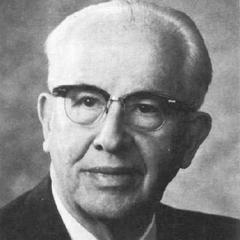
Ezra Taft Benson
Ezra Taft Benson

Ezra Taft Benson was a notable American farmer and politician. Born on August 4, 1899, in Whitney, Idaho, he dedicated much of his life to agricultural endeavors. Serving as the Secretary of Agriculture under President Dwight D. Eisenhower from 1953 to 1956, Benson was also a member of the LDS Church and a leader within the church's ranks. more

You May Also Like

“What is the use of this fuss about morality when the issue only involves a horse? The first and most difficult teaching of civilisation concerns man's behaviour to his inferiors. Make humanity gentle or reasonable toward animals, and strife or injustice between human beings would speedily terminate.”

“Simplicity is a pleasant thing in children, or at any age, but it is not necessarily admirable, nor is affectation altogether a thing of evil. To be normal, to be at home in the world, with a prospect of power, usefulness, or success, the person must have that imaginative insight into other minds that underlies tact and savoir-faire, morality and beneficence. This insight involves sophistication, some understanding and sharing of the clandestine impulses of human nature. A simplicity that is merely the lack of this insight indicates a sort of defect.”

“So long as men desire to live together, no man may initiate the use of physical force against others. . . . When a man attempts to deal with me by force, I answer him by force. It is only as retaliation that force may be used and only against the man who starts its use. No, I do not share his evil or sink to his concept of morality: I merely grant him his choice, destruction, the only destruction he had the right to choose: his own.”

“A rational process is a moral process. You may make an error at any step of it, with nothing to protect you but your own severity, or you may try to cheat, to fake the evidence and evade the effort of the quest - but if devotion to the truth is the hallmark of morality, then there is no greater, nobler, more heroic form of devotion than the act of a man who assumes the responsibility of thinking.”

“But neither life nor happiness can be achieved by the pursuit of irrational whims. Just as man is free to attempt to survive in any random manner, but will perish unless he lives as his nature requires, so he is free to seek his happiness in any mindless fraud, but the torture of frustration is all he will find, unless he seeks the happiness proper to man. The purpose of morality is to teach you, not to suffer and die, but to enjoy yourself and live.”

“You who prattle that morality is social and that man would need no morality on a desert island - it is on a desert island that he would need it most. Let him try to claim, when there are no victims to pay for it, that a rock is a house, that sand is clothing, that food will drop into his mouth without cause or effort, that he will collect a harvest tomorrow by devouring his stock seed today - and reality will wipe him out, as he deserves; reality will show him that life is a value to be bought and that thinking is the only coin noble enough to buy it.”

“To wipe off the froth of falsehood from the foaming lips of inebriated virtue, when fresh from the sexless orgies of morality and reeling from the delirious riot of religion, may doubtless be a charitable office.”