“The life of labor does not make men, but drudges.”
Quote by Ralph Waldo Emerson
Work
Journals of Ralph Waldo Emerson, 1820-1872 [1876] Ed
This volume compiles the private journals of Ralph Waldo Emerson, spanning the years 1820 through 1872, as edited and released in 1876. The entries document Emerson's intellectual development, philosophical reflections, and daily experiences during a formative period in American transcendentalism. The journals serve as a primary source for understanding his ideas on nature, self-reliance, and spirituality, as well as his responses to contemporary social and political events. The 1876 edition organizes these writings to provide a chronological view of Emerson's evolving worldview, making it a valuable resource for scholars and readers interested in 19th-century American thought and literature. more
Author
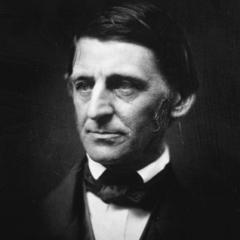
Ralph Waldo Emerson
American essayist, poet, and philosopher. Born on May 25, 1803, and died on April 27, 1882. Known for his transcendentalist philosophy, his works have had a profound impact on literature and the intellectual world. more
You May Also Like
“A poem, a sentence, causes us to see ourselves. I be, and I see my being, at the same time.”
Source: The Journals
“In youth, we clothe ourselves with rainbows, and go as brave as the zodiac.”
Source: The Annotated Emerson
“Between cultivated minds the first interview is the best.”
Source: Emerson in His Journals
Source: Delphi Complete Works of Ralph Waldo Emerson (Illustrated)
Source: Collected Works of Ralph Waldo Emerson, Volume VIII: Letters and Social Aims
Source: A Year with Emerson: A Daybook
Source: The Portable Emerson: New Edition
“I like me Italian girls; half Halle Berry, half Penelope Cruz sort of thing!”
Source: Delphi Complete Works of Ralph Waldo Emerson (Illustrated)