Quotessence
Home / Quotes / Quote by Thomas Hardy

Quote by Thomas Hardy

Work

Jude the Obscure

Thomas Hardy's novel follows the life of Jude Fawley, a man of humble origins who aspires to a higher education and a better life, only to face numerous challenges and heartbreaks in his pursuit of love and social mobility. more
Author

Thomas Hardy
Thomas Hardy

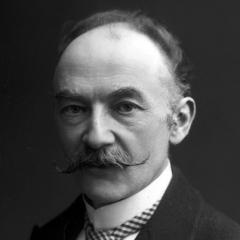
Thomas Hardy, a British novelist born on June 2, 1840, and died on January 11, 1928, is renowned for his novels that depict rural life, reflecting the social changes in 19th-century England. His works often carry a sense of pessimism, depicting the fates of characters with sympathy. more

You May Also Like

“As he left Yata’s home that morning, he knew that a part of his life was complete and that whatever path he chose, he would experience the ache of unfulfilled dreams. For a moment he allowed himself to feel regret at the thought of never building a cottage by the river with Trevanion. Or living the life of a simple farmer connected to the earth. Or traveling his kingdom, satisfying the nomad he had become. To be Finnikin of the Rock and the Monts and the River and the Flatlands and the Forest. To be none of those at all. Yet he also knew that to lose her to another man would be a slow torture every day for the rest of his life.”

“In a way, losing hope and losing importance are the same thing. It is that youthful vibrance, that eternal longing and believing, that makes youth so important--if you grow old and lose that without finding another way to be important, you will slip away, fall into insignificance, like one sheet of paper. You may be useful, but you will never stand out from the crowd. You cannot look at a piece of paper and say, "I remember you." You never can.”

“There are only two things that determine whether you're old enough to do something -- whether you understand what the hell you're getting yourself into -- and whether you're willing to accept responsibility for it if it blows up in your face. How many years you've been alive is ultimately meaningless -- except in as much as it gives parents a general sort of idea as to whether their child is likely to understand what they're getting themselves into. Small children, for instance, can't really comprehend shades of grey -- where a decision or choice can have different answers depending on the circumstances. For them, everything is black and white.”