“Since the discovery of oxygen the civilised world has undergone a revolution in manners and customs. The knowledge of the composition of the atmosphere, of the solid crust of the earth, of water, and of their influence upon the life of plants and animals, was linked to that discovery. The successful pursuit of innumerable trades and manufactures, the profitable separation of metals from their ores, also stand in the closest connection therewith.”
Quote by Justus von Liebig
Work
Familiar Letters on Chemistry, in its relation to Physiology, Dietetics, Agriculture, Commerce and Political Economy: Edited by John Blyth
This book is a compilation of letters that delve into the interdisciplinary applications of chemistry, illustrating its significance in multiple areas of human endeavor. Edited by John Blyth, the letters provide insights into how chemical principles can be applied to enhance understanding and practices in physiology, dietetics, agriculture, commerce, and political economy. more
Author
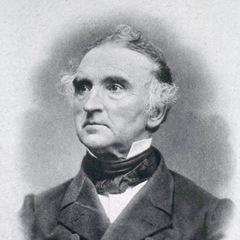
Justus von Liebig
Justus von Liebig, a German chemist born on May 12, 1803, and died on April 18, 1873, is considered one of the founders of organic chemistry. He made significant contributions to the development of agricultural chemistry and food science. more
You May Also Like
Source: Respiratory adaptations, capillary exchange, and reflex mechanisms: proceedings of the August Krogh Centenary Symposium held in Srinagar, Kashmir (India), October 11-15, 1974
Source: The Complete Works of Oscar Wilde: De profundis,
Source: De Profundis: The Ballad of Reading Gaol and Other Writings
Source: Letters
“A library is a growing organism.”
Source: Colon Classification