Quotessence
Home / Quotes / Quote by Errol Morris

Quote by Errol Morris

“God is greater than anything that man can do or has done. He is not undone by just a train of powder. "Our God is not out of breath because he has blown one tempest and swallowed a Navy: Our God has not burnt out his eyes because he has looked upon a Train of Powder."”

Quote by Errol Morris

Author
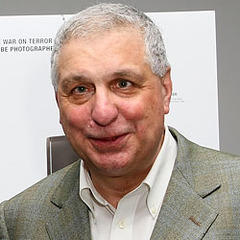
Errol Morris
Errol Morris

Errol Morris, born on February 5, 1948, is a renowned film director from the United States. His works are known for their unique narrative style and in-depth exploration of historical events. His representative works include 'The Act of Killing' and 'The Thin Blue Line', which have won the love of audiences and won multiple awards. more

You May Also Like

“Did you know that Nuremberg courtroom was designed so that the Allies could project movies during the trial? And, also so that they could film the trial? The first movies that were shown were prepared by John Ford - a compilation of material from the liberation of Bergen-Belsen and Dachau. But here comes an interesting part. Did you know they lit (using fluorescent tubes) the defendants so they could be filmed watching the films that were shown during the trial?”

“Robert Nozick [a Havard philosopher, famous for his book "Anarchy, State and Utopia"] defined revenge as delivering the message that you know what someone has done, and it doesn't involve hurting them or doing anything to them beyond that. It's just delivering the message that their crime has been noted not just by its victims, because the victim might be dead, but by another who has a different moral view and will challenge the perpetrator's view.”

“Basically, "Making a Murderer" chronicles a set of crimes committed in Wisconsin: Manitowoc, Wisconsin. The first crime is a miscarriage of justice. Steven Avery is convicted and sentenced to a very, very long prison sentence for the assault on a woman. And it comes to light through DNA evidence that he was not the assailant.”

“What le Carré is so good at is unpicking something very specific about Englishness. That is almost part of why I think he wrote the novel. You can feel le Carré's anger that someone who has had the benefits of an English education and an English upbringing is using that privilege to basically do the worst things imaginable. There is an anger in the book about that.”

“I think that is so interesting. It is le Carré. There must be so much of him when he was younger. He's an interesting character. I don't want to say the word "passive" because there is something very active about the way he is passive, if that makes any sense: the nature of his watching and his listening is active. It is always so alive because he is, essentially, a spy.”