“There are few enough people with sufficient independence to see the weaknesses and follies of their contemporaries and remain themselves untouched by them.”
Quote by Albert Einstein
Work
The Albert Einstein Collection: Essays in Humanism, The Theory of Relativity, and The World As I See It
The Albert Einstein Collection is a compilation of essays and writings that showcase the renowned physicist's insights into science, philosophy, and human values. It includes his influential essay on humanism, which explores the role of science in society, his seminal work on the theory of relativity, and his personal musings on life and the universe in 'The World As I See It'. more
Author
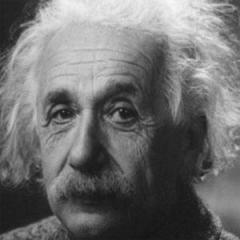
Albert Einstein
Albert Einstein, a German-born theoretical physicist, is renowned for his work on relativity and the photoelectric effect. His contributions revolutionized our understanding of the universe and had a profound impact on modern physics. more
You May Also Like
“There is no such thing as group originality, group creativity or group perspicacity.”
Source: Selected papers on industry
“Profundity and originality are attributes of single, if not singular, minds.”
Source: Selected papers on industry
Source: The Complete Papers And Writings Of Abraham Lincoln (Biographically Annotated Edition)
Source: The Rambler
Source: The Works of Samuel Johnson, LL.D.: With An Essay on His Life and Genius