Quotessence
Home / Quotes / Quote by Julian Baggini

Quote by Julian Baggini

“I am very Aristotelian in approach - not in detail - so I always find I'm saying things that get people frustrated like 'It's a matter of balance and judgement'. To a lot of philosophers these are terrible words because they're admitting of vagueness and uncertainty. The more I've done philosophy, the more I've become convinced that that is the way it is.”

Quote by Julian Baggini

Author
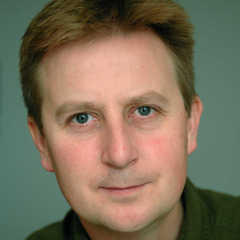
Julian Baggini
Julian Baggini

Julian Baggini is a British author and philosopher born in 1968. He is known for his popularization and in-depth exploration of philosophy, with a focus on making philosophy more accessible to the general public. more

You May Also Like

“I think the appropriate kind of skepticism is this: you've got to be asking questions all the time, you've also got to make sure that you're doing so in the spirit of genuinely wanting to find the answers - and that also means being open. I battle with this: I know I tend to be very skeptical and as a result, I veer towards the dismissive. But being aware of the tendency, I like to challenge my own skepticism and make sure it's not just knee-jerk. You need to be skeptical towards yourself as well. When you're only skeptical outwards you've got an unbalanced skepticism.”

“Talking about creating truth tends to alarm people, because truth is meant to be 'just out there'. It doesn't take much thinking to appreciate that we sometimes change truths on the ground - sometimes just by words. A new law will change what is possible. I think - perhaps because the paradigm we follow tends to be scientific, and all about discovery - the creative element of truth is one upon which we don't focus so much attention. This is particularly so in anglophone philosophy, perhaps because we associate it too much with those 'pernicious' continental trends.”

“In the case of Donald Trump I think you've got to accept that a lot of what's going on in political discourse is based upon judgement. How the economy works - how people work - what will come to pass - what will not come to pass - what is possible - what is not possible. There is this whole modal dimension. There's a lot in politics that is making a judgement about what might be and can be and would be. Trump frightens a lot of people but there is a bizarre possible world in which it turns out as he's vindicated, though most of us think the evidence is against it.”

“If I'm a CEO and I say, 'Misogyny will not be tolerated', that's a more powerful statement than 'It is my sincere hope and our intention to eradicate misogyny from this company'. Sometimes saying things in that more categorical form, has a real function. Although, if you dig beneath it, it is actually one of J.L. Austin's illocutionary acts; you're trying to make something happen rather than describing something already happened. The fact that it has the grammatical form of a description is fine.”

“I'm not one of these people who is sour about academia. I'm very lucky not to be in academia, but I am an absolute parasite. While I was writing my book on comparative philosophy I was drawing on some fantastic scholars - university based people. The academy is absolutely necessary, but there should also be a role for those bringing it together. It's such a frustration sometimes.”

“Wasn't it Bertrand Russell who used the phrase 'The superior virtue of the oppressed'? There is always this temptation amongst people that see themselves as progressive, and on the side of the weak. They demonize the powerful, but over-romanticize the weak. I think we should recognize that. If you take seriously the idea that people are always going to use truth claims as a means of powering their own agenda, that is going to happen whether you're weak or powerful.”

“Once Steve Fuller said that there is this idea that your responsibility as an intellectual is just to speak the truth as you see it. But actually, you should be more appreciative of what needs to be said. I don't think that's ever an excuse to say something you don't believe is true - but sometimes the emphasis has to be different. Well, if I'm talking to an audience of hardline atheists, I'll be trying to unsettle them a bit more, whereas, if I'm speaking to an audience of believers, I'll be giving them more of the pros of atheism. It's about having a sensitivity to context.”

“For most people their ideal life involves an intimate relationship with another person; one which often has a sexual basis. But there's no logic about it; why shouldn't people choose to live together with someone they just like? 'Of course' if we were too unquestioning about it, and we said 'well, that person has got to be someone of the opposite sex, and it's got to be for life, and divorce is terrible', then we're stuck. But if you don't recognize the importance that kind of bond has for human beings - you can't really understand what is needed to live a good life.”