Quotessence
Home / Quotes / Quote by Richard Cumberland

Quote by Richard Cumberland

“All other men, being born of woman, have a navel, by reason of the umbilical vessels inserted into it, which from the placenta carry nourishment to children in the womb of their mothers; but it could not be so with our first parents. It cannot be believed that God gave them navels which would have been altogether useless.”

Quote by Richard Cumberland

Author
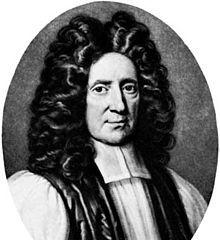
Richard Cumberland
Richard Cumberland

Richard Cumberland, born in 1632 in England, was a prominent philosopher known for his contributions to ethics and political philosophy, particularly his influence on utilitarianism. His ethical theory emphasized the功利 nature of moral actions, holding that the value of an action is determined by its outcomes. more

You May Also Like

“From whence it is obvious to conclude that, since our Faculties are not fitted to penetrate into the internal Fabrick and real Essences of Bodies; but yet plainly discover to us the Being of a GOD, and the Knowledge of our selves, enough to lead us into a full and clear discovery of our Duty, and great Concernment, it will become us, as rational Creatures, to imploy those Faculties we have about what they are most adapted to, and follow the direction of Nature, where it seems to point us out the way.”

“Computers and rocket ships are examples of invention, not of understanding. ... All that is needed to build machines is the knowledge that when one thing happens, another thing happens as a result. It's an accumulation of simple patterns. A dog can learn patterns. There is no "why&rdqo"; in those examples. We don't understand why electricity travels. We don't know why light travels at a constant speed forever. All we can do is observe and record patterns.”

“If [science] tends to thicken the crust of ice on which, as it were, we are skating, it is all right. If it tries to find, or professes to have found, the solid ground at the bottom of the water it is all wrong. Our business is with the thickening of this crust by extending our knowledge downward from above, as ice gets thicker while the frost lasts; we should not try to freeze upwards from the bottom.”

“Let us suppose the mind to be, as we say, white paper, void of all characters, without any ideas; how comes it to be furnished? Whence comes it by that vast store which the busy and boundless fancy of man has painted on it with an almost endless variety? Whence has it all the materials of reason and knowledge? To this I answer, in one word, from experience.”