“Do you know that I have undergone three quarters of this labour entirely for the sake of the fourth quarter?”
Quote by Thomas Hardy
Work
Tess of the d'Ubervilles
This work presents the tragic narrative of a rural woman facing the harsh moral judgments of late Victorian society. The story follows the protagonist as she moves through various stages of life, encountering both kindness and cruelty from those around her. The novel is noted for its sympathetic portrayal of its central character and its critique of the rigid social conventions of the era. Written in Hardy's characteristic prose style, the work combines detailed descriptions of the English countryside with psychological exploration of its characters. The title itself hints at the character's ancestral heritage and the complex relationship between social status and personal virtue that defines much of the narrative's tension. more
Author
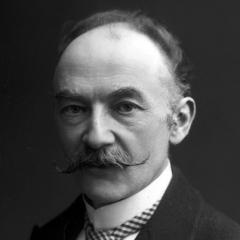
Thomas Hardy
Thomas Hardy, a British novelist born on June 2, 1840, and died on January 11, 1928, is renowned for his novels that depict rural life, reflecting the social changes in 19th-century England. His works often carry a sense of pessimism, depicting the fates of characters with sympathy. more
You May Also Like
Source: So Long, and Thanks for All the Fish
“Advice is a dangerous gift, even from the wise to the wise, and all courses may run ill.”
Source: The Lord of the Rings: One Volume
“Let him not vow to walk in the dark, who has not seen the nightfall.”
Source: The Lord of the Rings: One Volume
Source: The Hitchhiker's Guide to the Galaxy: The Trilogy of Five
Source: Northanger abbey
Source: So Long, and Thanks for All the Fish
Source: A Soldier of the Great War
Source: So Long, and Thanks for All the Fish
Source: A Soldier of the Great War
Source: So Long, and Thanks for All the Fish