“It is just observation that the people commonly intend the Public Good.”
Quote by Alexander Hamilton
Work
The Federalist Papers: A Collection of Essays Written in Favour of the New Constitution
This book is a collection of essays that were originally published in newspapers to promote the ratification of the U.S. Constitution. The authors, Alexander Hamilton, James Madison, and John Jay, discuss the principles and structure of the new government. The essays are considered foundational texts in American political thought and legal history. more
Author
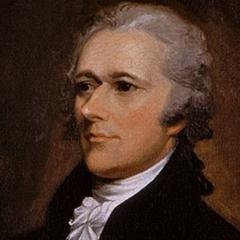
Alexander Hamilton
Alexander Hamilton was a Founding Father of the United States, born on January 11, 1757, and died on July 12, 1804. He played a crucial role in the American Revolutionary War and was instrumental in the drafting of the U.S. Constitution. As the first Secretary of the Treasury, Hamilton promoted fiscal stability and economic growth, establishing the First Bank of the United States and proposing solutions for federal debt. His ideas and policies had a profound impact on the early political and economic development of the United States. more
You May Also Like
Source: The Federalist, on the new constitution, written in 1788, with an appendix, containing the letters of Pacificus and Helvidius on the proclamation of neutrality of 1793, also the original articles of confederation and the constitution of the United States
Source: Selected Writings of James Madison
“It should therefore be difficult in a republic to declare war; but not to make peace.”
Source: Commentaries on the Constitution of the Un. States: With a Prelim. Review of the Constitut. History of the Colonies and States, Bef. the Adoption of the Constitution
Source: Commentaries on the Constitution of the United States: With a Preliminary Review of the Constitutional History of the Colonies and States, Before the Adoption of the Constitution
Source: The Federalist, on the new constitution, written in 1788, with an appendix, containing the letters of Pacificus and Helvidius on the proclamation of neutrality of 1793, also the original articles of confederation and the constitution of the United States
Source: The federalist papers