Quotessence
Home / Quotes / Quote by David C. Driskell

Quote by David C. Driskell

“There was this judgmental sense of what was good and what was bad in my father's words. You couldn't necessarily shut the people out who were not considered good. But on the other hand, as children we were told, you don't do those things, which means that you don't really mix with that crowd as much. You don't go to town on Saturday night and hang out and go to the beer parlors. Even though it was a dry county, there was plenty of moonshine and beer and liquor being brought in from other counties.”

Quote by David C. Driskell

Author
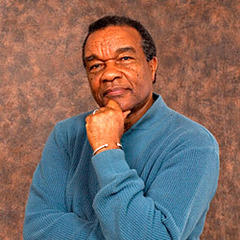
David C. Driskell
David C. Driskell

David C. Driskell is an American artist renowned for his contributions to the field of African American art. His works, which blend painting, sculpture, and printmaking, explore themes of race, history, and cultural identity. more

You May Also Like

“I know my grandfather drank occasionally socially, what we call "taking a sip." And my father never touched the bottle. He condemned my grandfather for doing that, and his punishment to his father was when my grandfather came to visit him from Georgia, he would not allow my grandfather to preach in his church.Even though my classmates very often drank alcohol in my presence and they would try and get me to join in, I felt, no, I didn't need that.”

“My sister was like my surrogate mother here, in Washington, with very much of the same persuasions as my mother. Even when friends came from home that I knew were more socially adaptable to the mores of the time, she would always caution me and say, "Be careful if you're going out with so and so because you know such and such a thing could happen." It was that kind of guardianship, and concern that imprinted me.”

“Personally, I think that my father's ministry does have some effect on one. I perhaps thought I wasn't listening that well, but I could almost recite his sermons. He had the old-fashioned preaching style of chanting. He would explain a point and then there would be this pitch to excite the audience because people would eventually shout and respond to what he was saying.”

“I think my criticism of the Pentecostal tradition that I heard with my sister's church was that it wasn't always audible. You couldn't quite figure out what was going on. And then, the people would very often do what they call speaking in tongues and I didn't know what they were saying. My father used to always say that if it can't be understood, then it's not the good news or not the gospel.”

“In 1951 I took my first art course. And one day I looked over my shoulder and there was this tall gentleman standing, very well-dressed and groomed, and he asked, "What is your name? I don't know you. What is your major?" I said history. And he looked at my drawing and looked at me and said, "You don't belong over there; you belong here." He was James A. Porter.”