Quotessence
Home / Quotes / Quote by Thomas Jefferson

Quote by Thomas Jefferson

Work

Memoirs, 2: Correspondence and Private Papers

This book is a compilation of letters, diaries, and other personal writings that offer a glimpse into the author's personal life and thoughts. more

Author
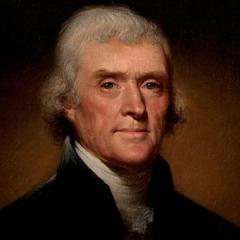
Thomas Jefferson
Thomas Jefferson

Thomas Jefferson was the third President of the United States, a distinguished politician, philosopher, architect, and scientist. He was born on April 13, 1743, and died on July 4, 1826. Jefferson advocated for democracy and freedom in politics and was one of the main authors of the Declaration of Independence. His political ideas had a profound impact on the founding and development of the United States. more

You May Also Like

“And Botany I rank with the most valuable sciences, whether we consider its subjects as furnishing the principal subsistence of life to man and beast, delicious varieties for our tables, refreshments from our orchards, the adornments of our flower-borders, shade and perfume of our groves, materials for our buildings, or medicaments for our bodies.”

“I have often thought that if heaven had given me choice of my position and calling, it should have been on a rich spot of earth, well watered, and near a good market for the productions of the garden. No occupation is so delightful to me as the culture of the earth, and no culture comparable to that of the garden. Such a variety of subjects, some one always coming to perfection, the failure of one thing repaired by the success of another, and instead of one harvest a continued one through the year.”

“The general (federal) government will tend to monarchy, which will fortify itself from day to day, instead of working its own cures.”

“Our tenet ever was . . . that Congress had not unlimited powers to provide for the general welfare, but were restrained to those specifically enumerated; and that, as it was never meant that they should provide for that welfare but by the exercise of the enumerated powers, so it could not have been meant they should raise money for purposes which the enumeration did not place under their action.”

“But, you may ask, if the two departments [i.e., federal and state] should claim each the same subject of power, where is the common umpire to decide ultimately between them? In cases of little importance or urgency, the prudence of both parties will keep them aloof from the questionable ground; but if it can neither be avoided nor compromised, a convention of the States must be called to ascribe the doubtful power to that department which they may think best.”

“Action will delineate and define you.”

“But the Chief Justice says, 'There must be an ultimate arbiter somewhere.' True, there must; but does that prove it is either party? The ultimate arbiter is the people of the Union, assembled by their deputies in convention, at the call of Congress or of two-thirds of the States. Let them decide to which they mean to give an authority claimed by two of their organs. And it has been the peculiar wisdom and felicity of our Constitution, to have provided this peaceable appeal, where that of other nations is at once to force.”