Quotessence
Home / Quotes / Quote by Norman Doidge

Quote by Norman Doidge

“If you want to lift a hundred pounds, you don't expect to succeed the first time. You start with a lighter weight and work up little by little. You actually fail to life a hundred pounds, every day, until the day you succeed. But it is in the days when you are exerting yourself that the growth is occurring.”

Quote by Norman Doidge

Author
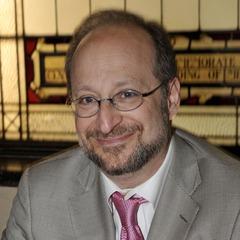
Norman Doidge
Norman Doidge

Norman Doidge is a renowned psychiatrist whose research focuses on the field of neuroplasticity. His book 'The Brain That Changes Itself: Stories of Personal Triumph from the Frontiers of Brain Science' has had a profound impact on the public's understanding of the brain's ability to change its structure and function through learning and experience. more

You May Also Like

“Are you stressed? Are you so busy getting to the future that the present is reduced to a means of getting there? Stress is caused by being "here" but wanting to be "there" or being in the present but wanting to be in the future. It's a split that tears you apart inside. To create and live with such an inner split is insane. The fact that everybody else is doing it doesn't make it any less insane.”

“Our brain comes hard-wired with an urge to play, one that hurls us into sociability. A child's play both demands and creates its own safe space, one in which she can confront threats, fears, and dangers, but always come through whole. Play offers a child a natural way to manage feared separations or abandonment, rendering them instead opportunities for mastery and self-discovery.”

“In today's world it is deceptively easy to lose sight of our direction and the things that matter and give us joy. How quickly the days can slip by, the years all gone, and we, at the end of our lives, mourning the life we dreamed of but never lived. Poetry urges us to stand once and for all, and now, in the heart of our own life.”

“Forget what you learned about poetry in school. (That it's complex, opaque, a problem to be solved in 1500 words by tomorrow.) Poetry is the last preserve of honest speech and the outspoken heart. It holds the cadence of common life. It has a passion for truth and justice and liberty; it is a buoy to people in ordinary trouble: to a friend whose life has gone skidding into the meridian, who has been struck by bad news, who is frying eggs and hash browns and has whiny child clinging to his pant leg.”