“We have said that the State must not absorb the individual or the family; both should be allowed free and untrammelled action so far as is consistent with the common good and the interest of others. Rulers should, nevertheless, anxiously safeguard the community and all its members; the community, because the conservation thereof is so emphatically the business of the supreme power, that the safety of the commonwealth is not only the first law, but it is a government's whole reason of existence.”
Quote by Pope Leo XIII
Work
A Light in the Heavens: Great Encyclical Letters of Pope Leo XIII
A comprehensive collection of Pope Leo XIII's encyclical letters, this book delves into the teachings and insights of one of the most influential pontiffs of the late 19th and early 20th centuries. The letters cover a wide range of topics, including social justice, religious freedom, and the role of the Church in modern society. more
Author
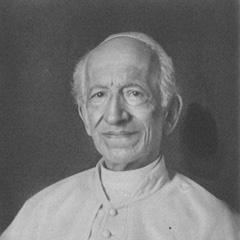
Pope Leo XIII
Pope Leo XIII (born Vincenzo Gioacchino Raffaele Luigi Pecci) served as the 256th Pope of the Catholic Church from 1878 to 1903, making him one of the longest-reigning popes in history. Born on March 2, 1810, in Carpineto, Italy, he died on July 20, 1903, in Rome. He is renowned for establishing modern Catholic social teaching through his landmark encyclical Rerum Novarum (1891), which addressed workers' rights and became a foundation of Catholic social doctrine. Leo XIII promoted Thomistic philosophy and worked to reconcile the Catholic Church with the modern world. more
You May Also Like
“We hold upon this earth the place of God Almighty.”
Source: A Light in the Heavens: Great Encyclical Letters of Pope Leo XIII
Source: A Light in the Heavens: Great Encyclical Letters of Pope Leo XIII
“Heart of Jesus, burning with love for us, inflame our hearts with love of Thee.”
Source: A Light in the Heavens: Great Encyclical Letters of Pope Leo XIII