“The Gnostics derived their leading doctrines and ideas from Plato and Philo, the Zend-avesta and the Kabalah, and the Sacred books of India and Egypt; and thus introduced into the bosom of Christianity the cosmological and theosophical speculations, which had formed the larger portion of the ancient religions of the Orient, joined to those of the Egyptian, Greek, and Jewish doctrines, which the Neo-Platonists had equally adopted in the Occident. Emanation from the Deity of all spiritual beings, progressive degeneration of these beings from emanation to emanation, redemption and return of all to the purity of the Creator; and, after the re-establishment of the primitive harmony of all, a fortunate and truly divine condition of all, in the bosom of God; such were the fundamental teachings of Gnosticism. The genius of the Orient, with its contemplations, irradiations, and intuitions, dictated its doctrines. Its language corresponded to its origin. Full of imagery, it had all the magnificence, the inconsistencies, and the mobility of the figurative style. Behold, it said, the light, which emanates from an immense centre of Light, that spreads everywhere its benevolent rays; so do the spirits of Light emanate from the Divine Light. Behold, all the springs which nourish, embellish, fertilize, and purify the Earth; they emanate from one and the same ocean; so from the bosom of the Divinity emanate so many streams, which form and fill the universe of intelligences. Behold numbers, which all emanate from one primitive number, all resemble it, all are composed of its essence, and still vary infinitely; and utterances, decomposable into so many syllables and elements, all contained in the primitive Word, and still infinitely various; so the world of Intelligences emanated from a Primary Intelligence, and they all resemble it, and yet display an infinite variety of existences. It revived and combined the old doctrines of the Orient and the Occident; and it found in many passages of the Gospels and the Pastoral letters, a warrant for doing so. Christ himself spoke in parables and allegories, John borrowed the enigmatical language of the Platonists, and Paul often indulged in incomprehensible rhapsodies, the meaning of which could have been clear to the Initiates alone.”
Quote by Albert Pike
Work
Morals And Dogma Of The Ancient And Accepted Scottish Rite (Illustrated): Chapter of Rose Croix
Browse quotes and source details for this work. more
Author
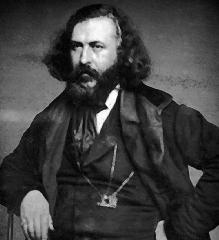
Albert Pike
Albert Pike was an American attorney, writer, explorer, and military commander. Born on December 29, 1809, and died on April 2, 1891. He is known for his contributions to the study of Native American culture, cryptography, and the history of the Mormon Church. more
You May Also Like
Source: Adira and the Dark Horse
Source: All the Hope We Carry
Source: Light Filters in: Poems