Quotessence
Home / Authors / Albert Pike
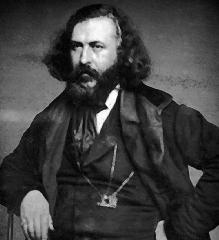
Albert Pike

Albert Pike Quotes

Attorney

Filter quotes by topic

Famous Albert Pike Quotes

“The Gnostics derived their leading doctrines and ideas from Plato and Philo, the Zend-avesta and the Kabalah, and the Sacred books of India and Egypt; and thus introduced into the bosom of Christianity the cosmological and theosophical speculations, which had formed the larger portion of the ancient religions of the Orient, joined to those of the Egyptian, Greek, and Jewish doctrines, which the Neo-Platonists had equally adopted in the Occident. Emanation from the Deity of all spiritual beings, progressive degeneration of these beings from emanation to emanation, redemption and return of all to the purity of the Creator; and, after the re-establishment of the primitive harmony of all, a fortunate and truly divine condition of all, in the bosom of God; such were the fundamental teachings of Gnosticism. The genius of the Orient, with its contemplations, irradiations, and intuitions, dictated its doctrines. Its language corresponded to its origin. Full of imagery, it had all the magnificence, the inconsistencies, and the mobility of the figurative style. Behold, it said, the light, which emanates from an immense centre of Light, that spreads everywhere its benevolent rays; so do the spirits of Light emanate from the Divine Light. Behold, all the springs which nourish, embellish, fertilize, and purify the Earth; they emanate from one and the same ocean; so from the bosom of the Divinity emanate so many streams, which form and fill the universe of intelligences. Behold numbers, which all emanate from one primitive number, all resemble it, all are composed of its essence, and still vary infinitely; and utterances, decomposable into so many syllables and elements, all contained in the primitive Word, and still infinitely various; so the world of Intelligences emanated from a Primary Intelligence, and they all resemble it, and yet display an infinite variety of existences. It revived and combined the old doctrines of the Orient and the Occident; and it found in many passages of the Gospels and the Pastoral letters, a warrant for doing so. Christ himself spoke in parables and allegories, John borrowed the enigmatical language of the Platonists, and Paul often indulged in incomprehensible rhapsodies, the meaning of which could have been clear to the Initiates alone.”

“The spoken discourse may roll on strongly as the great tidal wave; but, like the wave, it dies at last feebly on the sands. It is heard by few, remembered by still fewer, and fades away, like an echo in the mountains, leaving no token of power. It is the written human speech, that gave power and permanence to human thought.”

“The power of a free people is often at the disposal of a single and seemingly an unimportant individual; a terrible and truthful power; for such a people feel with one heart, and therefore can lift up their myriad arms for a single blow. And, again, there is no graduated scale for the measurement of the influences of different intellects upon the popular mind. Peter the Hermit held no office, yet what a work he wrought!”

“If the Soul sees, after death , what passes on this earth , and watches over the welfare of those it loves, then must its greatest happiness consist in seeing the current of its beneficent influences widening out from age to age, as rivulets widen into rivers, and aiding to shape the destinies of individuals, families, States, the World; and its bitterest punishment, in seeing its evil influences causing mischief and misery , and cursing and afflicting men, long after the frame it dwelt in has become dust, and when both name and memory are forgotten.”

“To sow, that others may reap; to work and plant for those that are to occupy the earth when we are dead; to project our influences far into the future, and live beyond our time; to rule as the Kings of Thought, over men who are yet unborn; to bless with the glorious gifts of Truth and Light and Liberty those who will neither know the name of the giver, nor care in what grave his unregarded ashes repose, is the true office of a Mason and the proudest destiny of a man.”

“Magic is that which it is; it is by itself, like the mathematics; for it is the exact and absolute science of Nature and its laws . Magic is the science of the Ancient Magi: and the Christian religion, which has imposed silence on the lying oracles, and put an end to the prestiges of the false Gods , itself reveres those Magi who came from the East, guided by a Star , to adore the Saviour of the world in His cradle.”

“The Blue Degrees are but the outer court...of the temple. Part of the symbols are displayed there to the initiate, but he is intentionally misled by false interpretation. It is not intended that he shall understand them, but it is intended that he shall imagine that he understands them...The true explanation is reserved for the Adepts, the Princes of Masonry (those of the 32nd and 33rd degrees)”

“Nothing excites men's curiosity so much as Mystery, concealing things which they desire to know; and nothing so much increases curiosity as obstacles that interpose to prevent them from indulging in the gratification of their desires. Of this the Legislators and Hierophants took advantage, to attract the people to their sanctuaries, and to induce them to seek to obtain lessons from which they would perhaps have turned away with indifference if they had been pressed upon them.”

“Toleration, holding that every other man has the same right to his opinion and faith that we have to ours; and liberality, holding that as no human being can with certainty say, in the clash and conflict of hostile faiths and creeds, what is truth, or that he is surely in possession of it, so everyone should feel that it is quite possible that another equally honest and sincere with himself, and yet holding the contrary opinion, may himself be in possession of the truth.”

“The Universe should be deemed an immense Being, always living, always moved and always moving in an eternal activity inherent in itself, and which, subordinate to no foreign cause, is communicated to all its parts, connects them together, and makes the world of things a complete and perfect whole.”