Quotessence
Home / Quotes / Quote by Lawrence Lessig

Quote by Lawrence Lessig

“There is a regulation of behavior on the Internet and in cyberspace, but that regulation is imposed primarily through code. The differences in the regulations effected through code distinguish different parts of the Internet and cyberspace. In some places, life is fairly free; in other places, it is more controlled. And the difference between these spaces is simply a difference in the architectures of control--that is, a difference in code.”

Quote by Lawrence Lessig

Work

Code: And Other Laws of Cyberspace, Version 2.0

This book delves into the legal and ethical challenges posed by the rapid development of technology and the internet, offering insights into the evolving nature of cyberspace law. more

Author
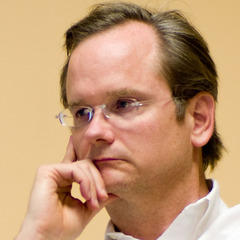
Lawrence Lessig
Lawrence Lessig

Lawrence Lessig is a distinguished political activist and legal scholar, recognized for his work in intellectual property law, copyright, and governance. He has been a professor at Harvard Law School and is the founder of the Creative Commons movement. more

You May Also Like

“We live in a world with "free" content, and this freedom is not an imperfection. We listen to the radio without paying for the songs we hear; we hear friends humming tunes that they have not licensed. We tell jokes that reference movie plots without the permission of the directors. We read our children books, borrowed from a library, without paying the original copyright holder for the performance rights.”

“A free culture supports and protects creators and innovators. It does this directly by granting intellectual property rights. But it does so indirectly by limiting the reach of those rights, to guarantee that follow-on creators and innovators remain as free as possible from the control of the past. A free culture is not a culture without property, just as a free market is not a market in which everything is free. The opposite of a free culture is a "permission culture" -- a culture in which creators get to create only with the permission of the powerful, or of creators from the past.”

“We are a cut-and-paste culture. The aim of the protectionists is to argue that a cut-and-paste culture is criminal. Well, it's only criminal if there's nothing out there that you can freely cut and paste. If we increasingly mark material as available for these non-commercial uses, then people will have the opportunity to see its importance.”

“Monopolies are not justified by theory; they should be permitted only when justified by facts. If there is no solid basis for extending a certain monopoly protection, then we should not extend that protection. This does not mean that every copyright must prove its value initially. That would be a far too cumbersome system of control. But it does mean that every system or category of copyright or patent should prove its worth. Before the monopoly should be permitted, there must be reason to believe it will do some good -- for society, and not just for monopoly holders.”

“As I've indicated, most books go out of print within one year. The same is true of music and film. Commercial culture is sharklike. It must keep moving. And when a creative work falls out of favor with the commercial distributors, the commercial life ends.”

“It might be crazy to expect a high government official to speak the truth. It might be crazy to believe that government policy will be something more than the handmaiden of the most powerful interests. It might be crazy to argue that we should preserve a tradition that has been part of our tradition for most of our history -- free culture. If this is crazy, then let there be more crazies. Soon.”