“After a few days in hospital, I was thinking, Oh, gee - I raised in a church, Protestant upbringing which I'd rejected as an adult - I'm lying in bed thinking, Hmmm, maybe I ought to pray. They always say there are no atheists in a foxhole... and I thought, Here I am in a pretty good-sized foxhole... and I thought Naahhh. I wouldn't respect any God who would listen to me after I'd rejected him so vociferously.”
Quote by Chuck Close
Author
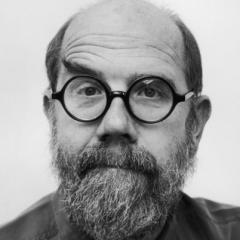
Chuck Close
Chuck Close is an American photographer known for his large-scale portrait paintings. His works are characterized by high-resolution and finely detailed depictions of individuals, capturing their unique features. Close's contributions to the art world have been profound, and he is considered one of the most outstanding portrait painters of the 20th century. more
You May Also Like
Source: The Complete Plato
“I had let my digust with teaching ruin my love of literature.”
“Not to be alone. To be spared the possibility of knowing oneself, in aloneness.”
“When I write I am the real me.”
Source: Hang a Thousand Trees with Ribbons: The Story of Phillis Wheatley
“Most of our miseries we bring on ourselves. And they're the sum of our own stupidity.”
Source: Hang a Thousand Trees with Ribbons: The Story of Phillis Wheatley