Quotessence
Home / Quotes / Quote by Thomas Young

Quote by Thomas Young

Work

Miscellaneous Works of the Late Thomas Young, M.D., F.R.S., &c: And One of the Eight Foreign Associates of the National Institute of France. Vols. I. & II., Including His Scientific Memoirs, &c

The volume includes a collection of Thomas Young's scientific and medical writings, showcasing his contributions to the fields of optics, physiology, and other scientific disciplines. It is a comprehensive collection of his work, spanning volumes I and II. more

Author
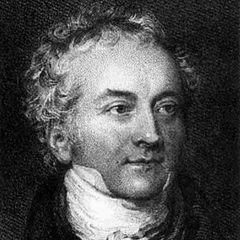
Thomas Young
Thomas Young

Thomas Young was an English scientist renowned for his contributions to optics, physics, and physiology. He is best known for his proposal of the wave theory of light, the double-slit experiment, and his theories on color vision. more

You May Also Like

“Now let me step back from the problem and very generally discuss natural selection and what we know about it. I think it is safe to say that we know for sure that natural selection, as a process, does work. There is a mountain of experimental and observational evidence, much of it predating genetics, which shows that natural selection as a biological process works.”

“A large number of well-trained scientists outside of evolutionary biology and paleontology have unfortunately gotten the idea that the fossil record is far more Darwinian than it is. This probably comes from the oversimplification inevitable in secondary sources: low-level textbooks semipopular articles, and so on. Also, there is probably some wishful thinking involved. In the years after Darwin, his advocates hoped to find predictable progressions. In general. these have not been found-yet the optimism has died hard and some pure fantasy has crept into textbooks.”

“There are about 250,000 different species of fossil plants and animals known . . In spite of this large quantity of information, it is but a tiny fraction of the diversity that [according to the theory] actually lived in the past. There are well over a million species living today and . . [it is] possible to predict how many species ought to be in our fossil record. That number is at least 100 times the number we have found.”