Quotessence
Home / Quotes / Quote by Alfred de Musset

Quote by Alfred de Musset

“Oh! my friend, when you feel bursting on your lips the vow of eternal love, do not be afraid to yield, but do not confound wine with intoxication; do not think the cup divine because the draft is of celestial flavor; do not be astonished to find it broken and empty in the evening.”

Quote by Alfred de Musset

Work

The Confession of a Child of the Century

This book is a first-person narrative detailing the life and thoughts of a child born in the early 19th century. It delves into themes of social change, personal growth, and the impact of historical events on a young soul. more

Author
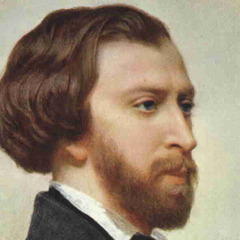
Alfred de Musset
Alfred de Musset

Alfred de Musset was a French dramatist and poet, born on December 11, 1810, in Paris, and died on May 2, 1857. Known for his romantic style, his works often depicted the contradictions of love and life, with notable plays including 'Thérèse' and 'La Muette de Portici'. more

You May Also Like

“If you are weak, dependent upon others, inclined to allow yourself to be dominated by opinion, to take root wherever you see a little soil, make for yourself a shield that will resist everything, for if you yield to your weaker nature you will not grow, you will dry up like a dead plant, and you will bear neither fruit nor flowers.”

“I could not clearly distinguish what was passing in my head; it seemed to me that I was under the influence of a horrible dream and that I had but to awake to find myself cured; at times it seemed that my entire life had been a dream, ridiculous and childish, the falseness of which had just been disclosed.”

“It was one of those somber evenings when the sighing of the wind resembles the moans of a dying man; a storm was brewing, and between the splashes of rain on the windows there was the silence of death. All nature suffers in such moments; the trees writhe in pain and twist their heads; the birds of the fields cower under the bushes; the streets of cities are deserted.”

“No Senses stronger than his brain can bear. Why has not Man a microscopic eye? For this plain reason, Man is not a Fly: What the advantage, if his finer eyes Study a Mite, not comprehend the Skies?... Or quick Effluvia darting thro' his brain, Die of a Rose, in Aromatic pain? If Nature thunder'd in his opening ears, And stunn'd him with the music of the Spheres... Who finds not Providence all-good and wise, Alike in what it gives, and what denies?”

“[T]hro’ this Air, this Ocean, and this Earth, All Nature quick, and bursting into birth. Above, how high progressive life may go? Around how wide? how deep extend below? Vast Chain of Being! which from God began, Ethereal Essence, Spirit, Substance, Man, Beast, Bird, Fish, Insect! what no Eye can see, No Glass can reach! from Infinite to Thee! From Thee to Nothing.... From Nature’s Chain whatever Link you strike, Tenth, or ten thousandth, breaks the chain alike.... All are but parts of one stupendous Whole: Whose Body Nature is, and God the Soul.”

“That, chang'd thro' all and yet in all the same, Great in the Earth as in th' Ætherial frame, Warms in the Sun, refreshes in the Breeze, Glows in the Stars, and blossoms in the Trees... Breathes in our soul, informs our mortal part... Submit - in this, or any other Sphere, Secure to be as blest as thou canst bear. All Nature is but Art, unknown to thee; All Chance, Direction which thou canst not see; All Discord, Harmony not understood... All partial Evil, universal Good.”