Quotessence
Home / Quotes / Quote by Michael Cunningham

Quote by Michael Cunningham

“Like the morning you walked out of that old house, when you were eighteen and I was, well, I had just turned nineteen, hadn't I? I was a nineteen-year-old and I was in love with Louis and I was in love with you, and I thought I had never seen anything so beautiful as the sight of you walking out a glass door in the early morning, still sleepy, in your underwear. Isn't it strange?”

Quote by Michael Cunningham

Work

The Hours: A Novel

The Hours is a complex and thought-provoking novel that weaves together the narratives of three women: Clarissa Vaughan, a middle-aged New York City party planner; Laura Brown, a housewife living in the 1950s; and Virginia Woolf herself, writing Mrs. Dalloway. The novel delves into the psychological and emotional landscapes of these characters, examining their struggles with personal crises and the universal human experience of time and memory. more

Author

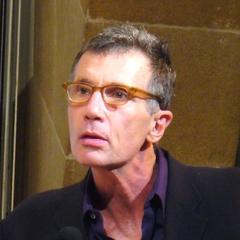
Michael Cunningham
Michael Cunningham

Michael Cunningham is an American writer renowned for his novel 'The Hours', which won the Pulitzer Prize in 1998. His works often explore themes of identity, memory, and gender. more

You May Also Like

“I don't know if I can face this. You know. The party and the ceremony, and then the hour after that, and the hour after that." "You don't have to go to the party. You don't have to go to the ceremony. You don't have to do anything at all." "But there are still the hours, aren't there? One and then another, and you get through that one and then, my god, there's another. I'm so sick.”

“If you don't like my book, write your own. If you don't think you can write a novel, that ought to tell you something. If you think you can, do. No excuses. If you still don't like my novel, find a book you do like. Life is too short to be miserable. If you do like my novels, I commend your good taste.”

“One writes not to be read but to breathe...one writes to think, to pray, to analyze. One writes to clear one's mind, to dissipate one's fears, to face one's doubts, to look at one's mistakes--in order to retrieve them. One writes to capture and crystallize one's joy, but also to disperse one's gloom. Like prayer--you go to it in sorrow more than joy, for help, a road back to 'grace'.”

“One of the great tragedies of life, it seems to me, is when a person classifies himself as someone who has no talents or gifts. When, in disgust or discouragement, we allow ourselves to reach depressive levels of despair because of our demeaning self-appraisal, it is a sad day for us and a sad day in the eyes of God. For us to conclude that we have no gifts when we judge ourselves by stature, intelligence, grade-point average, wealth, power, position, or external appearance is not only unfair but unreasonable.”