Quotessence
Home / Quotes / Quote by Ana Castillo

Quote by Ana Castillo

“The language in New Mexico is very different. At first when you hear the speech here, you don't really know what to do with it, but then I just went with it, because as a writer as well as a translator I do believe that translated words are not different names for the same thing. They're different names for different things. I tried to stay as true as I could, so I used Ruben Cobos' dictionary of Southwestern Spanish, and when I went into Spanish I never assumed the word I would use would be the word a nuevomexicano would use.”

Quote by Ana Castillo

Author
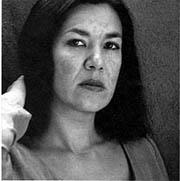
Ana Castillo
Ana Castillo

Ana Castillo, born on June 15, 1953, is an American novelist known for her works that focus on the experiences of Latinx Americans, particularly the stories of Mexican Americans. Her novels often delve into themes of race, gender, and identity. more

You May Also Like

“We were doing the same thing. We will never have "a" Chicano English or Spanish because of regional differences. But I think that because of our bilingual history, we'll always be speaking a special kind of English and Spanish. What we do have to do is fight for the right to use those two languages in the way that it serves us. Nuevo-mexicanos have done it very well for hundreds of years, inventing words where they don't have them. I think the future of our language is where we claim our bilingualism for its utility.”

“Many European countries are fascinated with minorities from the United States. They still see this country as a world power and they covet that power...I was approached by a professor once at the Sorbonne in Paris and asked about racism in this country, and when I reflected on racism on the streets of Paris - you know, I'd be considered an Arab there -well, she didn't want to address that...It just goes to show it was easier for Europeans to study racism in the United States than it is from within the belly of the beast.”

“I had serious reservations about putting my son in the public schools in my area. I have a tremendous amount of fear for the future of my boy. He's nine-and- a-half and dark-skinned. By the time he's 12 or 13, who knows who he's going to be identifying with in these days when you get shot down for wearing expensive Nikes to school...I've heard that if a Latino makes it to 19 years of age, he has a good chance of surviving into adulthood. Up until then, you don't know.”