“Where does our investigation get its importance from, since it seems only to destroy everything interesting, that is, all that is great and important? (As it were all the buildings, leaving behind only bits of stone and rubble.) What we are destroying is nothing but houses of cards and we are clearing up the ground of language on which they stand.”
Quote by Ludwig Wittgenstein
Work
Philosophical Investigations
Ludwig Wittgenstein's Philosophical Investigations is a profound and influential text that delves into the complexities of human thought and understanding. The book is structured as a series of dialogues and reflections, examining concepts such as meaning, truth, and the nature of philosophical problems. Wittgenstein challenges traditional philosophical assumptions and proposes a new approach to understanding language and its role in shaping our perceptions of the world. more
Author
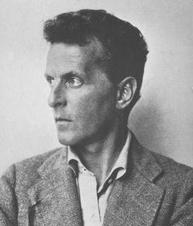
Ludwig Wittgenstein
Ludwig Wittgenstein was one of the most important philosophers of the 20th century, renowned for his profound contributions to language, logic, and philosophical methods. His ideas have had a significant impact on the development of analytic philosophy and philosophy of language. more
You May Also Like
“Conduct is more convincing than language.”
Source: The Journal of John Woolman
“And don't confound the language of the nation with long-tail'd words in osity and ation.”
Source: New Selected Poems and Translations
“Speaking of Sir Winston Churchill: He mobilized the English language and sent it into battle.”
“Under the tropic is our language spoke, And part of Flanders hath receiv'd our yoke.”