“[Raymond Roussel] said that after his first book he expected that the next morning there would be a kind of aura around his person and that everyone in the street would be able to see that he had written a book. This is the obscure desire harboured by everyone who writes. It is true that the first text one writes is neither written for others, nor because one is what one is: one writes to become other than what one is. One tries to modify one's way of being through the act of writing.”
Quote by Michel Foucault
Author
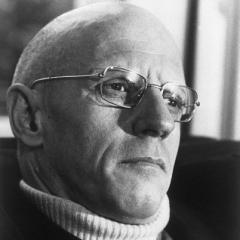
Michel Foucault
Michel Foucault was a French philosopher known for his critical analysis of knowledge, power, and discourse. His work covered a wide range of topics, including madness, prisons, sexuality, archaeology of knowledge, and biopolitics. Foucault's ideas have had a profound impact on postmodernism, critical theory, and cultural studies. more
You May Also Like
Source: The Outlander Series 8-Book Bundle: Outlander, Dragonfly in Amber, Voyager, Drums of Autumn, The Fiery Cross, A Breath of Snow and Ashes, An Echo in the Bone, Written in My Own Heart's Blood
“I wished to see storms only on those coasts where they raged with most violence.”
Source: In Search of Lost Time, Volume II: Within a Budding Grove (A Modern Library E-Book)
Source: The House of Mirth
“The silence often of pure innocence persuades when speaking fails.”
Source: Plays of William Shakespeare
“I wanted to laugh. Or maybe get mad. Or maybe shrug at how strange everyone was, especially me.”
Source: The Perks of Being a Wallflower YA edition