Quotessence
Home / Quotes / Quote by Donna Tartt

Quote by Donna Tartt

“I believe having a great diversity of teachers is harmful and confusing for a young mind, in the same way I believe that it is better to know one book intimately than a hundred superficially”

Quote by Donna Tartt

Author
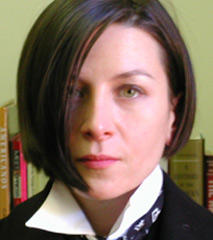
Donna Tartt
Donna Tartt

Donna Tartt is an American author known for her unique narrative style and profound psychological descriptions. Her works are characterized by complex characters and captivating plots. Her debut novel, 'The Goldfinch,' received widespread acclaim and won multiple literary awards. more

You May Also Like

“But walking through it all was one thing; walking away, unfortunately, has proved to be quite another, and though once I thought I had left that ravine forever on an April afternoon long ago, now I am not so sure. Now the searchers have departed, and life has grown quiet around me, I have come to realize that while for years I might have imagined myself to be somewhere else, in reality I have been there all the time: up at the top by the muddy wheel-ruts in the new grass, where the sky is dark over the shivering apple blossoms and the first chill of the snow that will fall that night is already in the air.”

“Though not untidy, exactly, it verged on being so. Books were stacked on every available surface; the tables were cluttered papers, ashtrays, bottles of whiskey, boxes of chocolates; umbrellas and galoshes made passage difficult in the narrow hall… Camilla’s night table was littered with empty teacups, leaky pens, dead marigolds in a water glass, and at the foot of her bed was a half-played game of solitaire… everywhere I looked was some fresh oddity: an old stereopticon, arrowheads in a dusty glass case, a staghorn fern, a bird’s skeleton…”

“We had not spoken about the incident in my room several nights before and, in the drowsy silence of the car, I felt the need to make things plain. “You know, Francis,” I said. “What?” It seemed the best thing was just to come right out and say it. “You know,” I said, “I’m really not attracted to you. I mean, not that—” “Isn’t that interesting,” he said coolly. “I’m really not attracted to you, either.” “But—” “You were there.” We drove the rest of the way to school in a not very comfortable silence.”

“Well, it's not called a mystery for nothing," said Henry sourly. "Take my word for it. But one mustn't underestimate the primal appeal to lose one's self, lose it utterly. And in losing it be born to the principle of continuous life, outside the prison of mortality and time. That was attractive to me from the first, even when I knew nothing about the topic and approached it less as potential mystes than anthropologist. Ancient commentators are very circumspect about the whole thing. It was possible, with a great deal of work, to figure out some of the sacred rituals-the hymns, the sacred objects, what to wear and do and say. More difficult was the mystery itself: how did one propel oneself into such a state, what was the catalyst?" His voice was dreamy, amused. "We tried everything. Drink, drugs, prayer, even small doses of poison.”

“And I feel I have something very serious and urgent to say to you, my non-existent reader, and I feel I should say it as urgently as if I were standing in the room with you. That life—whatever else it is—is short. That fate is cruel but maybe not random. That Nature (meaning Death) always wins but that doesn’t mean we have to bow and grovel to it. That maybe even if we’re not always so glad to be here, it’s our task to immerse ourselves anyway: wade straight through it, right through the cesspool, while keeping eyes and hearts open. And in the midst of our dying, as we rise from the organic and sink back ignominiously into the organic, it is a glory and a privilege to love what Death doesn’t touch.”