Quotessence
Home / Quotes / Quote by Maria Popova

Quote by Maria Popova

“Beyond any human lifetime, and often even within it, what is recorded is what is remembered, the records gradually displacing the actuality of lived events. And what is recorded is a fraction of what is thought, felt, acted out, lived—a fraction at best edited by the very act of its selection, at worst warped by rationalization or fictionalized by a deliberate retelling of reality. The stories we tell about our own lives, to others but especially to ourselves, we tell in order to make our lives livable.”

Quote by Maria Popova

Work

Figuring

Browse quotes and source details for this work. more

Author

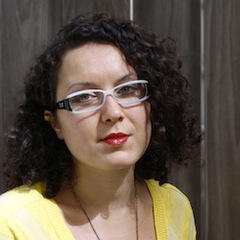
Maria Popova
Maria Popova

Maria Popova, born in 1980 in Bulgaria, is a talented writer with a broad influence in the fields of literature, art, science, and more. Her works cover a wide range of subjects, including philosophy, psychology, history, and her writing style is highly appreciated by readers. more

You May Also Like

“Ecology is beginning to slowly shift focus with tentative explorations of what the world would look like if process, rather than matter were the basis for reality What if we defined a species in terms of its life processes? We might seriously doubt whether the California condor or the tall grass prairie can be 'saved' or even 'restored.' Perhaps we can re-create some local conditions that foster a few nests of condors or a few acres of prairie. But the life process of the condor ended with the urbanization of the California foothills and the living ebb and flow of the tall grass prairies died with the plowing of the Great Plains. What if we suggested that a thing is what it does? In this light, the Rocky Mountain locust was a immense aperiodic energy flow that linked life processes on a continental scale. This notion of life-as-process might seem unusual in a society in which material existence is primary. But such a perception informs our deepest understanding of life. Indeed, life-as-process underlies our notion of euthanasia. When loved ones are simply bodies, devoid of the capacity to care, respond, or relate again a away that we can recognize as being "them," we understand that they are gone even before they are dead.”

“The images detached from every aspect of life merge into a common stream in which the unity of that life can no longer be recovered. Fragmented views of reality regroup themselves into a new unity as a separate pseudoworld that can only be looked at. The specialization of images of the world evolves into a world of autonomized images where even the deceivers are deceived. The spectacle is a concrete inversion of life, an autonomous movement of the nonliving.”

“I should still, paradoxical as it may sound, like to maintain the opposite valuation of the dream in relation to the mysterious foundation of our being, whose phenomena we are. The more aware I become of these omnipotent art impulses in nature, and find in them an ardent longing for illusion and for redemption by illusion, the more I feel compelled to make the metaphysical assumption that the truly existent, the primal Oneness, eternally suffering and contradictory, also needs the delightful vision, the pleasurable illusion for its constant redemption: an illusion that we, utterly caught up in it and consisting of it—as a continuous becoming in time, space and causality, in other words—are required to see as empirical reality.”