“I let them do some simple arithmetic. In a group of one hundred people, how many assholes are there? How many fathers who humiliate their children? How many morons whose breath stinks like rotten meat but who refuse to do anything about it? How many hopeless cases who go on complaining all their lives about the non-existent injustices they’ve had to suffer? Look around you, I said. How many of your classmates would you be pleased not to see return to their desks tomorrow morning? Think about that one family member of your own family, that irritating uncle with his pointless, horseshit stories at birthday parties, that ugly cousin who mistreats his cat. Think about how relieved you would be - and not only you, but virtually the entire family - if that uncle or cousin would step on a landmine or be hit by a five-hundred-pounder dropped from a high altitude. If that member of the family were to be wiped off the face of the earth. And now think about all those millions of victims of all the wars there have been in the past - I never specifically mentioned the Second World War, I used it as an example because it’s the one that most appeals to their imaginations - and think about the thousands, perhaps tens of thousands of victims who we need to have around like we need a hole in the head. Even from a purely statistical standpoint, it’s impossible that all those victims were good people, whatever kind of people that may be. The injustice is found more in the fact that the assholes are also put on the list of innocent victims. That their names are also chiselled into the war memorials.”
Quote by Herman Koch
Work
The narrative unfolds in real time during a single evening at a fashionable restaurant, where two brothers and their wives meet to discuss a disturbing incident involving their teenage sons. The story is told from the perspective of one brother, a former history teacher, whose unreliable narration slowly reveals the complexity of the situation and the moral questions at stake. The formal setting of the restaurant—with its elaborate menu, precise service, and social rituals—contrasts with the increasingly dark subject matter being discussed in hushed tones between courses. Through this constrained structure, the novel examines how far parents will go to protect their children, the nature of complicity, and the facades maintained within families and social classes. more
Author
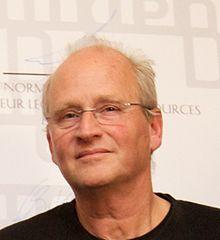
Herman Koch is a German writer known for his distinctive narrative style and profound social insights. His works often explore moral dilemmas and the complexities of human nature. more
You May Also Like
“If I didn’t think too hard or ask too many questions, it was easy. p. 63”
“I do what I can, when I can, cuz when I can't, then I can't.”
“Daughters aren’t trash you can toss away, Dad. I had to deal with the mess you left.”
“It's hard to know where to stand when you are surrounded by stupidity.”
“The boy stood with the mouth of the cave yawning wide behind him.”