Quotessence
Home / Quotes / Quote by Almeida Garrett

Quote by Almeida Garrett

“Os reflexos do céu na terra são ilimitados e imperfeitos como as incompletas existências que a habitam.”

Quote by Almeida Garrett

Author
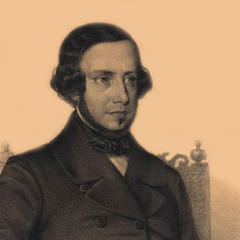
Almeida Garrett
Almeida Garrett

Almeida Garrett, a Portuguese poet, was born on February 4, 1799, and passed away on December 9, 1854. His poetry, deeply influenced by the Romantic movement, is known for its profound emotions and unique style. more

You May Also Like

“My definition of Theology My proverb of theology is a doctrine study of overall foundation of biblical notions, transcendence, an scriptures relativist, researcher and conservative of the Word of God with sensible and measured pursuit of infinite growth, a marriage of the spiritual knowledge (Gnosis), and unutterable love for the faith in constant pursuits and mission for truths with devoutness to prowess faith and love from faith’s vocation and noetic that’s flamed within that gives us the calling (vocation) of theologian. For theology pursues and endless journey of the Lord’s knowledge while maintaining the faith and is the strength hold of creed that manifest purpose, ontology and guardianship of the soul and wisdom, in a relation, a sound mind for divinity. . .”

“In his airport bestseller from 2018, Enlightenment Now, Steven Pinker, the leading voice in the choir of bourgeois optimism, revelled in the ‘conquest of infectious disease’ all over the globe – Europe, America, but above all the developing countries – as proof that ‘a rich world is a healthier world’, or, in transparent terms, that a world under the thumb of capital is the best of all possible worlds. ‘ “Smallpox was an infectious disease” ’, Pinker read on Wikipedia – ‘yes, “smallpox was” ’; it exists no more, and the diseases not yet obliterated are being rapidly decimated. Pinker closed the book on the subject by confidently predicting that no pandemic would strike the world in the foreseeable future. Had he cared to read the science, he would have known that waves from a rising tide were already crashing against the fortress he so dearly wished to defend. He could, for instance, have opened the pages of Nature, where a team of scientists in 2008 analysed 335 outbreaks of ‘emerging infectious diseases’ since 1940 and found that their number had ‘risen significantly over time’.”

“For some reason there is a tendency to assume that one wild animal is a suitable model for another related species, whereas similar evidence would not be acceptable in human or veterinary medicine. For example, Shulaw etal. (1986) developed a serologic test to detect antibodies to Mycobacterium aviumssp. paratuberculosisin white-tailed deer, but determined the validity of the test “in deer” by using samples from infected sika and fallow deer. It is doubtful that a test developed to detect disease in humans would be accepted for use in public health circles, if its validity had been established by using squirrel monkeys and baboons!”

“Epidemiologists-scientists who study the spread of disease-use a special number to describe how contagious a virus is. It's called the basic reproduction number, or R0 for short. It's complicated to calculate but simple to understand-it counts how many people one sick person is expected to infect over the course of his or her illness. If I'm sick with a cold and I make two other people sick, the R0 of my virus is 2. Colds and seasonal flus typically have R0 values of around 1.5 to 2. The 1918 flu pandemic R0 was estimated to be 2 to 3, while diseases like polio and small pox have R0 values of around 5 to 7.”