Quotessence
Home / Quotes / Quote by Pablo Neruda

Quote by Pablo Neruda

Author

Pablo Neruda
Pablo Neruda

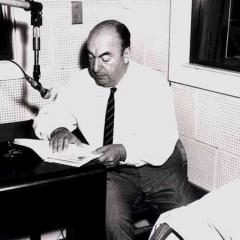
Pablo Neruda, full name Neftali Ricardo Reyes Basoalto, was a Chilean poet and politician who served as a Senator of Chile. Born on July 12, 1904, in Talcahuano, Chile, he passed away on September 23, 1973. Neruda is considered one of the greatest poets of the 20th century, known for his rich poetry and profound social commitment. more

You May Also Like

“My guess is that you have, at times, unwittingly prayed for adversity. Think about it. What are you asking for when you pray for patience? You are probably asking for trying situation that will demand that you be patient. What are you asking for when you pray for humility? It's likely you are asking for your ego to be brought down a few notches. What are you asking for when you pray for more reliance on God? Well, you may be asking for God to take away those things you rely on instead of him. When you pray for God's blessings, you are praying for the kind of character that will desire to be holy and do what it takes to get there. Whether you realize it or not, you may be praying for some form of adversity that God will use like an obstacle course to condition you into a strong and fit soldier for his service.”

“Luther's personality as well as his teachings shows ambivalence toward authority. On the one hand he is overawed by authority—that of a worldly authority and that of a tyrannical God—and on the other hand he rebels against authority—that of the Church. He shows the same ambivalence in his attitude toward the masses. As far as they rebel within the limits he has set he is with them. But when they attack the authorities he approves of, an intense hatred and contempt for the masses comes to the fore. […] we shall show that this simultaneous love for authority and the hatred against those who are powerless are typical traits of the "authoritarian character.”

“A woman must have a thorough knowledge of music, singing, drawing, dancing, and the modern languages; she must be well trained in the fighting styles of the Kyoto masters and the modern tactics and weaponry of Europe. And besides all this, she must possess a certain something in her air and manner of walking, the tone of her voice, her address and expressions, or the word will be but half-deserved. All this she must possess, and to all this she must yet add something more substantial, in the improvement of her mind by extensive reading, meditation, and Oriental discipline.”

“She was pointedly reminding me,' Professor Coles shares pensively, 'that she hadn't forgotten my repeated references to [Emerson's speech at Harvard], to the emphasis its author ... placed on character, the distinction he made between it and intellect. She was implying that even such a clarification, such an insistence, could all too readily become an aspect of the very problem Emerson was discussing---the intellect at work, analyzing its relationship to the lived life of conduct (character), with no apparent acknowledgement of the double irony of it all! The irony that the study of philosophy, say, even moral philosophy or oral reasoning, doesn't by any means necessarily prompt in either the teacher or the student a daily enacted goodness; and the further irony that a discussion of that very irony can prove equally sterile, in the sense that yet again one is being clever---with no apparent consequences, so far as one's every actions go.”