Quotessence
Home / Quotes / Quote by Gregory David Roberts

Quote by Gregory David Roberts

Work

Shantaram

This novel is a richly detailed narrative that delves into the complexities of human existence, following the protagonist's journey from a life of crime to a quest for self-discovery and peace. The story is set against the backdrop of a vibrant and chaotic Mumbai, offering a vivid portrayal of the city's diverse cultures and communities. The protagonist's transformation is central to the narrative, as he navigates the challenges of addiction, the allure of the criminal underworld, and the search for a meaningful life. more
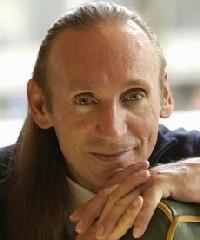
Author

Gregory David Roberts

Gregory David Roberts is an Australian author best known for his autobiographical novel 'The Shawshank Redemption.' This novel was later adapted into a successful film, becoming a classic. Born on June 1, 1952, Roberts' life has been marked by adventure and challenge. more

You May Also Like

“For God is so desirous that the government and direction of every man should be undertaken by another man like himself, and that every man should be ruled and governed by natural reason, that He earnestly desires us not to give entire credence to the things that He communicates to us supernaturally, nor to consider them as being securely and completely confirmed until they pass through this human aqueduct of the mouth of man.”

“Thus, to receive spiritual help in time of need requires, first of all, not to deny but to affirm the search. Painful questions must be raised, faced, and then lived. This means that we must constantly avoid the temptation of offering or accepting simple answers, to be easy defenders of God, the Church, the tradition, or whatever we feel called to defend. Experience suggests that such glib apologetics animate hostility and anger, and finally a growing alienation from whom or what we are trying to defend. Be careful when life’s questions swirl around you in times of pain. Beware of easy answers or guarantees. Seek the companionship of others who will befriend you and listen as you live the questions of your life.”

“In carrying out his mandate, it is evident that, in addition to being a man of prayer, Dr. King was a contemplative, Dr. Ruth Haley Barton, founder of the Transforming Center, affirmed the inclusion of contemplation and prayerfulness in his life when, in honor of Martin Luther King Day in January 2010, she wrote that Dr. King’s “life was characterized by a powerful integration of prayer and contemplation with a profound commitment to decisive and loving action in the world.’ Barton’s insight is extremely valuable in the discussion of the power of prayer and spiritual direction from an African American perspective. In identifying Dr. King as a man of contemplative action, she included a clear definition of that term: ‘Contemplative action is action that emerges from our real encounters with God. It is doing what God calls us to do when he calls us to do it - no matter how afraid we are or how ill-equipped we feel. Contemplative action is the willingness to go beyond being primarily concerned for our own safety and survival to the place where we know that our real life is hidden with Christ in God no matter what happens to our physical life. Contemplative action is doing the right thing, at the right time, in the right Spirit, completely given over to a Power that is beyond our own - even, and perhaps most especially, when the risks are very great. This kind of action is impossible without being radically in touch with the Source of our life through prayer and contemplation.”

“When we pray "Let your kingdom come," we aren't asking God to bring history to an end and whisk us to realms of glory, or to wave a magic wand and solve all the problems we face in our life. Rather, we are making a radical commitment to live our life in the world ("on earth") in such loving abandonment to God that the values and principles, the perspectives and dynamics of God's realm of life and wholeness become incarnate in and through our being and doing. Here too we are utterly incapable of actualizing the kingdom in this way. We can, however, through loving abandonment, allow God to incarnate kingdom life in and through us in the circumstances of our daily life.”