Quotessence
Home / Quotes / Quote by Isaiah

Quote by Isaiah

“Even to your old age and gray hairs I am he, I am he who will sustain you. I have made you and I will carry you; I will sustain you and I will rescue you.”

Quote by Isaiah

Author
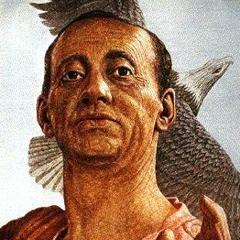
Isaiah
Isaiah

Isaiah is believed to be an ancient Israelite prophet. His life and activities are unknown, but his prophecies and teachings have had a profound impact on Judaism and Christianity. Isaiah's prophecies are recorded in the Book of Isaiah in the Bible. more

You May Also Like

“Consider the wave of revulsion that floods the average person when he or she hears of the practice of human sacrifice by the Aztecs and other so-called primitive peoples. How savage and barbaric such practices seem. But when a Christian or Jew comes across human sacrifice in the Bible (see Jephthah's immolation of his daughter in Judges 11:30-40), is he or she repulsed?”

“I cannot see how it can be argued that one should speak in tones of reverence and awe about the alleged divine instruction-in Psalms-to grab the defenseless bodies of innocent infants and dash their brains out against the nearest rocks or walls.”

“God is one among several hypotheses to account for the phenomena of human destiny, and it is now proving to be an inadequate hypothesis. To a great many people, including myself, this realization is a great relief, both intellectually and morally. It frees us to explore the real phenomena for which the God hypothesis seeks to account, to define them more accurately, and to work for a more satisfying set of concepts.”

“We are used to discounting the river-gods and dryads of the Greeks as poetical fancies, and even the chief figures in the classical Pantheon-Venus, Minerva, Mars, and the rest-as allegories. But, forgetting that they once carried as much sanctity as our saints and divinities, we refrain from applying the same reasoning to our own objects of worship.”

“And what is the religion of many persons but a kind of demonism that delights in human sacrifices and causes them to look with horror on the greatest part of mankind? Plutarch, it is well known, has observed very justly that it is better not to believe in a god than to believe him to be a capricious and malevolent being.”