Quotessence
Home / Quotes / Quote by Russell T Davies

Quote by Russell T Davies

Author

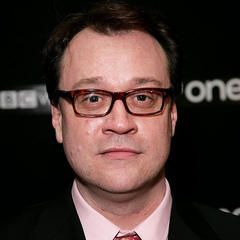
Russell T Davies
Russell T Davies

Russell T Davies is a renowned British television producer known for his work in the science fiction and fantasy genres. Born on April 27, 1963, he has produced notable television series such as 'Doctor Who', 'Torchwood', and 'The Sarah Jane Adventures'. more

You May Also Like

“Thus did a handful of rapacious citizens come to control all that was worth controlling in America. Thus was the savage and stupid and entirely inappropriate and unnecessary and humorless American class system created. Honest, industrious, peaceful citizens were classed as bloodsuckers, if they asked to be paid a living wage. And they saw that praise was reserved henceforth for those who devised means of getting paid enormously for committing crimes against which no laws had been passed. Thus the American dream turned belly up, turned green, bobbed to the scummy surface of cupidity unlimited, filled with gas, went bang in the noonday sun.”

“I see men assassinated around me every day. I walk through rooms of the dead, streets of the dead, cities of the dead; men without eyes, men without voices; men with manufactured feelings and standard reactions; men with newspaper brains, television souls and high school ideas. Kennedy himself was 9/10ths the way around the clock or he wouldn't have accepted such an enervating and enfeebling job -- meaning President of the United States of America. How can I be concerned with the murder of one man when almost all men, plus females, are taken from cribs as babies and almost immediately thrown into the masher?”

“The bourgeoisie, by the rapid improvement of all instruments of production, by the immensely facilitated means of communication, draws all, even the most barbarian, nations into civilization. The cheap prices of its commodities are the heavy artillery with which it batters down all Chinese walls, with which it forces the barbarians' intensely obstinate hatred of foreigners to capitulate. It compels all nations, on pain of extinction, to adopt the bourgeois mode of production; it compels them to introduce what it calls civilization into their midst, i.e., to become bourgeois themselves. In one word, it creates a world after its own image.”

“To be white, or straight, or male, or middle class is to be simultaneously ubiquitious and invisible. You’re everywhere you look, you’re the standard against which everyone else is measured. You’re like water, like air. People will tell you they went to see a “woman doctor” or they will say they went to see “the doctor.” People will tell you they have a “gay colleague” or they’ll tell you about a colleague. A white person will be happy to tell you about a “Black friend,” but when that same person simply mentions a “friend,” everyone will assume the person is white. Any college course that doesn’t have the word “woman” or “gay” or “minority” in its title is a course about men, heterosexuals, and white people. But we call those courses “literature,” “history” or “political science.” This invisibility is political.”

“It was culture as class performance, literature fetishised for its ability to take educated people on false emotional journeys, so that they might afterwards feel superior to the uneducated people whose emotional journeys they liked to read about. Even if the writer himself was a good person, and even if his book really was insightful, all books were ultimately marketed as status symbols, and all writers participated to some degree in this marketing. Presumably this was how the industry made money.”

“It was culture as class performance, literature fetishised for its ability to take educated people on false emotional journeys, so that they might afterwards feel superior to the uneducated people whose emotional journeys they liked to read about. Even if the writer himself was a good person, and even if his book really was insightful, all books were ultimately marketed as status symbols, and all writers participated to some degree in this marketing. Presumably this was how the industry made money. Literature, in the way it appeared at these public readings, had no potential as a form of resistance to anything.”