Quotessence
Home / Quotes / Quote by Richard Wilbur

Quote by Richard Wilbur

“We know what boredom is: it is a dull Impatience or a fierce velleity, A champing wish, stalled by our lassitude, To make or do. In the strict sense, of course, We invent nothing, merely bearing witness To what each morning brings again to light”

Quote by Richard Wilbur

Work

Collected Poems 1943-2004

This volume brings together a selection of poems written over a significant period, reflecting the author's evolution as a poet throughout the decades. more

Author
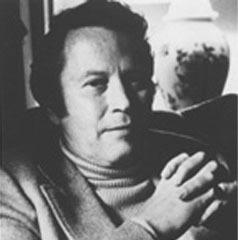
Richard Wilbur
Richard Wilbur

Richard Wilbur is an American poet renowned for his elegant style and profound themes. His works blend classical and modern elements, earning him the admiration of readers and critics alike. more

You May Also Like

“The poet presents the imagination with images from life and human characters and situations, sets them all in motion and leaves itto the beholder to let these images take his thoughts as far as his mental powers will permit. This is why he is able to engage men of the most differing capabilities, indeed fools and sages together. The philosopher, on the other hand, presents not life itself but the finished thoughts which he has abstracted from it and then demands that the reader should think precisely as, and precisely as far as, he himself thinks. That is why his public is so small.”

“Two Chinamen visiting Europe went to the theatre for the first time. One of them occupied himself with trying to understand the theatrical machinery, which he succeeded in doing. The other, despite his ignorance of the language, sought to unravel the meaning of the play. The former is like the astronomer, the latter the philosopher.”

“A man of intellect is like an artist who gives a concert without any help from anyone else, playing on a single instrument--a piano, say, which is a little orchestra in itself. Such a man is a little world in himself; and the effect produced by various instruments together, he produces single-handed, in the unity of his own consciousness. Like the piano, he has no place in a symphony; he is a soloist and performs by himself--in soli tude, it may be; or if in the company with other instruments, only as principal; or for setting the tone, as in singing.”