Quotessence
Home / Quotes / Quote by Leroy Chiao

Quote by Leroy Chiao

“The United States, Russia, and China are the only three countries in the world that can launch astronauts into space. Mostly in the U.S. you see some companies trying to launch private commercial people into space, but nobody's done it yet. The only private vehicle that's made it into space so far is Spaceship 1 in 2004, and that was an effort that was funded by one of the Microsoft founders, and he spent about $20 million to develop this spacecraft to do a sub-orbital flight. And it's not the same as going into orbit, but it was a huge first step.”

Quote by Leroy Chiao

Author
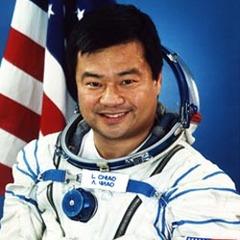
Leroy Chiao
Leroy Chiao

Leroy Chiao is an American engineer born on August 28, 1960. He is renowned for his exceptional contributions to the field of space exploration, serving as an astronaut for the National Aeronautics and Space Administration (NASA) and participating in multiple space missions. more

You May Also Like

“If you increase the number of rockets you build and you buy, then it's the scale of the economy, the price is going to come down. It may not come down in order of magnitude, but if several commercial ventures start being successful and there becomes a bigger market for these rockets, the price will naturally come down a bit. That's why I think Excalibur Almaz, we're a little bit unique in that we don't look at our so-called competition with disdain, we want them to succeed and it needs to have more than one player. Even if we are successful, we couldn't handle the entire market ourselves.”

“One of the biggest concerns about going out beyond lower Earth orbit is the radiation. We find that exercise seems to counteract a lot of the negative effects of space flight, like bone loss and muscle atrophy and cardiovascular systems issues. We exercise two hours a day on the station, which is a huge hit out of your day. It's great for staying in shape, but you know, it cuts into the productivity of the crew and if you look at how expensive it is to get a crew into space, if we can keep them healthy and have them exercise, but spend less time doing it, we can get more done.”

“Exercise is very important, first of all if you think about it, especially in a long flight like a six month space flight and on the ISS. If you didn't exercise and used the analogy on earth, it would be like laying in bed. So, just imagine laying in bed for several months, and even just trying to get up and walk, you probably wouldn't be able to. But if you got up and you exercised two hours a day, you'd probably be okay, and that's the same in space.”

“We were doing something called telemedicine, where we were using the ultrasound. One interesting application of this ultrasound is the possibility that you could possibly use it to measure critical bone areas during a long space mission and track if you're losing bone in these areas. On Earth, when they check you for bone loss, you get in this big machine. It's the size of a room and it's got a platform with an x-ray that scans your whole body and in critical areas and it takes a while and it just wouldn't be practical to have a machine like that in space.”

“The ultrasound that has application not only in space for a long mission or for a mission to the Moon or Mars, but also in remote areas on the Earth. Not even just - I'm not even talking about expeditions like to the Antarctic, but just a remote area, a small town somewhere. The local doctor is not going to know everything, and so if that person can link in with a diagnostic ultrasound to the hospital in New York City through the internet, then they can do a very quick diagnosis of something that's wrong with someone that's in this remote area.”

“We have self-assessment tools, computer-based tools to see how we are performing mentally in outer space and there's some also very interesting technology and work that's being funded by NRSBI to look at facial recognition to look at your patterns to see if you're experiencing stress or fatigue. It's a kind of thing that I think will gain acceptance with gradually. But it probably has more to immediate application in things like homeland security, and looking at facial recognition of people going through airports and things like that to see who's under stress.”

“The training kicked in and we quickly went through our emergency procedures, I took manual control and I got the spacecraft under control and stopped about 50 meters from the space station. So, the net effect of the failure was that we were actually turning and speeding up towards the space station when we should have been slowing down, so it was quite a dangerous situation. But we got manual control, performed the first manual docking to the station at night. The training pays off. It was just automatic. We had our books out already, we went right to the right procedures and executed them.”

“The most important thing about an astronaut is you have to take for a given a person's done pretty well in school, has the intelligence and all of that to learn new systems and new things. But after that, the most important thing I think is being able to get along with others. Flexibility and teamwork, those issues because as we fly longer and longer in space, those are really important factors, even on short shuttle missions, those are important factors, to put a crew together that can work together effectively as a team, that can get along.”