“They most the world enjoy who least admire.”
Quote by Edward Young
Work
The Poetical Works of Milton, Young, Gray, Beattie, and Collins
This anthology brings together the poetic writings of five influential English poets from different literary periods. John Milton, best known for his epic Paradise Lost, represents the 17th-century tradition of religious and heroic verse. Edward Young, a poet of the 18th century, is noted for his reflective and melancholic style, particularly in Night-Thoughts. Thomas Gray, a key figure in the early Romantic movement, is celebrated for his Elegy Written in a Country Churchyard. James Beattie, a Scottish poet and philosopher, contributed with his didactic and pastoral poems. William Collins, an 18th-century lyric poet, is remembered for his odes and imaginative verse. The collection offers a broad view of English poetry from the Restoration through the early Romantic era, showcasing diverse themes, forms, and sensibilities. more
Author
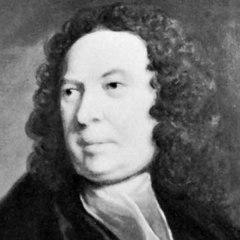
Edward Young
Edward Young, a renowned English poet, was born on July 3, 1683, and died on April 5, 1765. His poetry, characterized by profound philosophical insights and a unique style, has had a lasting impact on literature. more
You May Also Like
“A strange alternative * * *Must women have a doctor or a dance?”
Source: Extracts from Young's Night thoughts, with observations upon them
“Who, for the poor renown of being smart, Would leave a sting within a brother's heart?”
Source: The Complete Works, Poetry and Prose of the Rev. Edward Young, LL.D.: Revised and Collated with the Earliest Editions. To which is Prefixed A Life of the Author
Source: Works
“Base and crafty cowards are like the arrow that flieth in the dark.”
Source: The works of Francis Bacon, Baron of Verulam, Viscount St. Alban, and Lord High Chancellor of England, in five volumes
Source: The Works...
Source: The Works of Francis Bacon, Lord Chancellor of England: A New Edition:
“I just like to act and write and produce. To me, making movies is the ultimate goal.”