“In going on with these Experiments, how many pretty systems do we build, which we soon find ourselves oblig'd to destroy! If there is no other Use discover'd of Electricity, this, however, is something considerable, that it may help to make a vain Man humble.”
Quote by Benjamin Franklin
Work
Benjamin Franklin: a biography in his own words
Benjamin Franklin: a biography in his own words is a compilation of Franklin's personal writings, letters, and essays, providing an intimate look into the mind and life of one of America's Founding Fathers. The book covers his early years, scientific discoveries, political career, and personal philosophies, offering readers a firsthand account of his remarkable life. more
Author
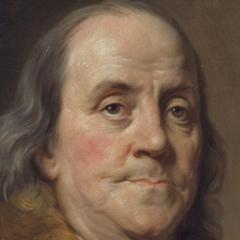
Benjamin Franklin
Benjamin Franklin was a prominent figure in American history, serving as one of the Founding Fathers of the United States. He was a statesman, scientist, inventor, and writer, born on January 17, 1706, and died on April 17, 1790. Franklin is renowned for his contributions to electricity, his support for the American colonial independence movement, and his successful diplomatic efforts in France. more
You May Also Like
Source: The Novum Organum Scientiarum: In Two Parts
Source: The Scientific Papers of James Clerk Maxwell
Source: Not Your Usual Founding Father: Selected Readings from Benjamin Franklin