Quotessence
Home / Quotes / Quote by Edward Bernays

Quote by Edward Bernays

“It is not necessary for the politician to be the slave of the public's group prejudices, if he can learn how to mold the mind of the voters in conformity with his own ideas of public welfare and public service. The important thing for the statesman of our age is not so much to know how to please the public, but to know how to sway the public. Those who manipulate this unseen mechanism of society constitute an invisible government which is the true ruling power of our country.”

Quote by Edward Bernays

Author
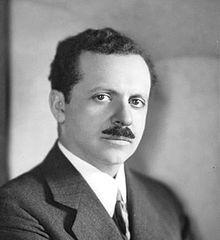
Edward Bernays
Edward Bernays

Edward Bernays, known as the father of public relations, was a public relations consultant who passed away on March 9, 1995, at the age of 103. Born on November 22, 1891, Bernays had a profound impact on the field of public relations, pioneering the application of psychological principles to commercial and governmental communication. more

You May Also Like

“I am myself persuaded, on the basis of extensive study of the historical evidence, that... the severity of each of the contractions - 1920-21, 1929-33, and 1937-38 - is directly attributable to acts of commission and omission by the Reserve authorities and would not have occurred under earlier monetary and banking arrangements.”

“Economists who adhere to rational-expectations models of the world will never admit it, but a lot of what happens in markets is driven by pure stupidity - or, rather, inattention, misinformation about fundamentals, and an exaggerated focus on currently circulating stories.”

“The de facto censorship which leaves so many Americans functionally illiterate about the history of US foreign affairs may be all the more effective because it is not official, heavy-handed or conspiratorial, but woven artlessly into the fabric of education and media. No conspiracy is needed.”

“The major accomplishment of analyzing illiteracy so far has been the listing of symptoms: the decrease in functional literacy; a general degradation of writing skills and reading comprehension; an alarming increase of packaged language (cliches used in speeches, canned messages); and a general tendency to substitute visual media (especially television and video) for written language.”