Quotessence
Home / Authors / Murray Rothbard
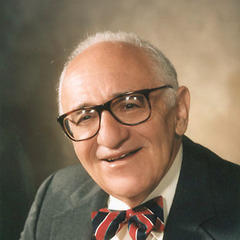
Murray Rothbard

Murray Rothbard Quotes

Economist

Filter quotes by topic

Famous Murray Rothbard Quotes

“Restoring prayer ... will scarcely at this date solve the grievous public school problem. Public schools are expensive and massive centers for cultural and ideological brainwashing, at which they are unfortunately far more effective than in teaching the 3 R's or in keeping simple order within the schools. Any plan to begin dismantling the public school monstrosity is met with effective opposition by the teachers' and educators' unions. Truly radical change is needed to shift education from public to unregulated private schooling, religious and secular, as well as home schooling by parents.”

“I see no other conceivable strategy for the achievement of liberty than political action. Religious or philosophical conversion of each man and woman is simply not going to work; that strategy ignores the problem of power, the fact that millions of people have a vested interest in statism and are not likely to give it up.... Education in liberty is of course vital, but it is not enough; action must also be taken to roll back the State.”

“We must therefore turn to history for enlightenment; here we find that none of the proclaimed anarchist groups correspond to the libertarian position, that even the best of them have unrealistic and socialistic elements in their doctrines. Furthermore, we find that all of the current anarchists are irrational collectivists, and therefore at opposite poles from our position. We must therefore conclude that we are not anarchists, and that those who call us anarchists are not on firm etymological ground, and are being completely unhistorical.”

“So: if the chronic inflation undergone by Americans, and in almost every other country, is caused by the continuing creation of new money, and if in each country its governmental "Central Bank" (in the United States, the Federal Reserve) is the sole monopoly source and creator of all money, who then is responsible for the blight of inflation? Who except the very institution that is solely empowered to create money, that is, the Fed (and the Bank of England, and the Bank of Italy, and other central banks) itself?”

“[T]he crucial question is not, as so many believe, whether property rights should be private or governmental, but rather whether the necessarily 'private' owners are legitimate owners or criminals. For ultimately, there is no entity called 'government'; there are only people forming themselves into groups called 'governments' and acting in a 'governmental' manner. All property is therefore always 'private'; the only and critical question is whether it should reside in the hands of criminals or of the proper and legitimate owners.”

“If we look around, then, at the crucial problem areas of our society - the areas of crisis and failure - we find in each and every case a “red thread” marking and uniting them all: the thread of government. In every one of these cases, government either has totally run or heavily influenced the activity.”

“Pollution and overuse of resources stem directly from the failure of government to defend private property. If property rights were to be defended adequately, we would find that here, as in other areas of our economy and society, private enterprise and modern technology would come not as a curse to mankind but as its salvation.”

“There can be no truly moral choice unless that choice is made in freedom; similarly, there can be no really firmly grounded and consistent defense of freedom unless that defense is rooted in moral principle. In concentrating on the ends of choice, the conservative, by neglecting the conditions of choice, loses that very morality of conduct with which he is so concerned. And the libertarian, by concentrating only on the means, or conditions, of choice and ignoring the ends, throws away an essential moral defense of his own position.”

“In fact, the libertarian would reason that the fact that human nature is a mixture of both good and evil provides its own particular argument in his favor. For if man is such a mixture, then the best societal framework is surely one in which evil is discouraged and the good encouraged. The libertarian maintains that the existence of the State apparatus provides a ready, swift channel for the exercise of evil, since the rulers of the State are thereby legitimated and can wield compulsion in ways that no one else is permitted to do.”

“I see the liberty of the individual not only as a great moral good in itself (or, with Lord Acton, as the highest political good), but also as the necessary condition for the flowering of all the other goods that mankind cherishes: moral virtue, civilization, the arts and sciences, economic prosperity.”

“One of the most important features of our economic resources is their scarcity: land, labor, and capital goods factors are all scarce, and may all be put to various possible uses. The free market uses them 'productively' because the producers are guided, on the market, to produce what the consumers most need: automobiles, for example, rather than buggies.”

“What do intellectuals and opinion makers get from big government? An increasing number of cushy jobs in the bureaucracy, or in the government-subsidized sector, staffing the welfare regulatory state, and apologizing for its policies, as well as propagandizing for them among the public. To put it bluntly, intellectuals, theorists, pundits, media elites, etc. get to live a life which they could not attain on the free market, but which they can gain at taxpayer expense.”

“The essence and the glory of the free market is that individual firms and businesses, competing on the market, provide an ever-changing orchestration of efficient and progressive goods and services: continually improving products and markets, advancing technology, cutting costs, and meeting changing consumer demands as swiftly and as efficiently as possible.”

“The public sector can only feed off the private sector; it necessarily lives parasitically upon the private economy. But this means that the productive resources of society - far from satisfying the wants of consumers - are now directed, by compulsion, away from these wants and needs. The consumers are deliberately thwarted, and the resources of the economy diverted from them to those activities desire by the parasitic bureaucracy and politicians.”

“The drum-fire of propaganda that the Fed is manning the ramparts against the menace of inflation brought about by others is nothing less than a deceptive shell game. The culprit solely responsible for inflation, the Federal Reserve, is continually engaged in raising a hue-and-cry about 'inflation,' for which virtually everyone else in society seems to be responsible. What we are seeing is the old ploy by the robber who starts shouting 'Stop, thief!' and runs down the street pointing ahead at others.”

“While big-business leaders and firms can be highly productive, servants of consumers in a free market economy, they are also all too often, seekers after subsidies, contracts, privileges, or cartels furnished by big government. Often, business lobbyists and leaders are the sparkplugs for the statist, interventionist system.”

“The modern welfare state, highly touted as soaking the rich to subsidize the poor, does no such thing. In fact, soaking the rich would have disastrous effects, not just for the rich but for the poor and middle classes themselves. For it is the rich who provide a proportionately greater amount of saving, investment capital, entrepreneurial foresight, and financing of technological innovation that has brought the Unites States to by far the highest standard of living - for the mass of the people - of any country in history.”

“[W]hich category of crimes does the State pursue and punish most intensely? [T]hose against private citizens or those against itself? The gravest crimes in the State's lexicon are almost invariably not invasions of private person or property, but dangers to its own contentment, for example, treason, desertion of a soldier to the enemy, failure to register for the draft, subversion and subversive conspiracy, assassination of rulers and such economic crimes against the State as counterfeiting its money or evasion of its income tax.”

“Libertarians regard the state as the Supreme, the eternal, the best organized aggressor against the persons and property of the mass of the public. All states everywhere, whether democratic, dictatorial, or monarchical, whether red, white, blue or brown.”