Quotessence
Home / Quotes / Quote by Edith Wharton

Quote by Edith Wharton

Work

Collected Works of Edith Wharton

The Collected Works of Edith Wharton is a comprehensive compilation of the author's extensive literary output. It encompasses her renowned novels such as 'The Age of Innocence' and 'Ethan Frome,' as well as her shorter works and critical essays. This collection provides readers with a deep insight into Wharton's exploration of social issues, her intricate character development, and her distinctive narrative voice. more

Author
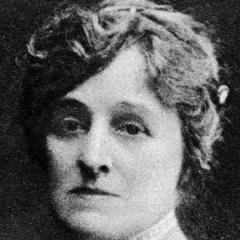
Edith Wharton
Edith Wharton

American novelist known for her delicate psychological portrayals and profound social insights. Edith Wharton came from a wealthy New York family and her works mainly reflect the American society at the end of the 19th century and the beginning of the 20th century. Her representative works include 'The Age of Innocence' and 'The House of Mirth' among others. more

You May Also Like

“In these last few days, we were close because we were both mortal men. We saw the same sun and the same twilight, we felt the same pull of the earth beneath our feet. We drank together and broke bread together. We might have made love together, if you had only allowed such a thing. But that’s all changed. You have your youth, yes, and all the dizzying wonder that accompanies the miracle. But I still see death when I look at you. I know now I cannot be your companion, and you cannot be mine”

“I . . . hit him . . . elsewhere.” “Where?” “In his . . .In his inguine.” “Oh, dear God.” It was unclear whether Ralston’s words were meant as prayer or blasphemy. What was clear was that the woman was a gladiator. “He called me a pie!” she announced, defensively. There was a pause. “Wait. That’s not right.” “A tart?” “Yes! That’s it!” She registered her brother’s fists and looked to Simon. “I see that it is not a compliment.” “No. It is not.”

“Juliana?” the words were low and far—too calm for her husband, who had found that he rather enjoyed the full spectrum of emotion now that he had experienced it. “Yes?” “What are you doing twenty feet in the air?” “Looking for a book.” “Would you mind very much returning to the earth?” “What are you thinking, climbing to the rafters in your condition?” “I am not an invalid, Simon, I still have use of all my extremes.” “You do indeed—particularly your extreme ability to try my patience—I believe, however, that you mean extremities.”

“Always it is thus with my new students, and especially with the human ones; the mind is the last muscle they train or use, and the one that they regard the least. Ask them about swordplay and they can list every blow from a duel a month old, but ask them to solve a problem or make a coherent statement and... well, I would be lucky to get more than a blank stare in return.”