Quotessence
Home / Quotes / Quote by Charles Caleb Colton

Quote by Charles Caleb Colton

Work

Lacon: Or, Many Things in Few Words, Addressed to Those who Think

This work delves into the principles of succinct communication, providing readers with guidance on how to convey complex concepts in a clear and concise manner. It is a treatise on the value of brevity and the importance of choosing words wisely. more

Author
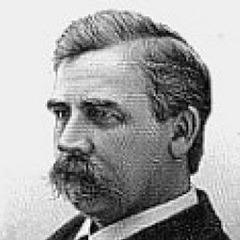
Charles Caleb Colton

Charles Caleb Colton was an English writer active from 1780 to 1832. Known for his humor and wit, he is particularly recognized for his aphorisms and satirical works. more

You May Also Like

“Time overlaps itself. A breath breathed from a passing breeze is not the whole wind, neither is it just the last of what has passed and the first of what will come, but is more--let me see--more like a single point plucked on a single strand of a vast spider web of winds, setting the whole scene atingle. That way; it overlaps ... as prehistoric ferns grow from bathtub planters.”

“There is a balance, a kind of standoff between the time continuum and the human entity, our frail bundle of soma and psyche. We eventually succumb to time, it's true, but time depends on us. We carry it in our muscles and genes, pass it on to the next set of time-factoring creatures, our brown-eyed daughters and jug-eared sons, or how would the world keep going. Never mind the time theorists, the cesium devices that measure the life and death of the smallest silvery trillionth of a second.... We were the only crucial clocks, our minds and bodies, way stations for the distribution of time.”

“Well, we think that time "passes," flows past us, but what if it is we who move forward, from past to future, always discovering the new? It would be a little like reading a book, you see. The book is all there, all at once, between its covers. But if you want to read the story and understand it, you must begin with the first page, and go forward, always in order. So the universe would be a very great book, and we would be very small readers.”